

10 Activities to Improve Fine Motor Skills at Home
Fine Motor vs. Gross Motor Skills: What’s the Difference?
Health Alliance
August 4, 2026
Child Developmental
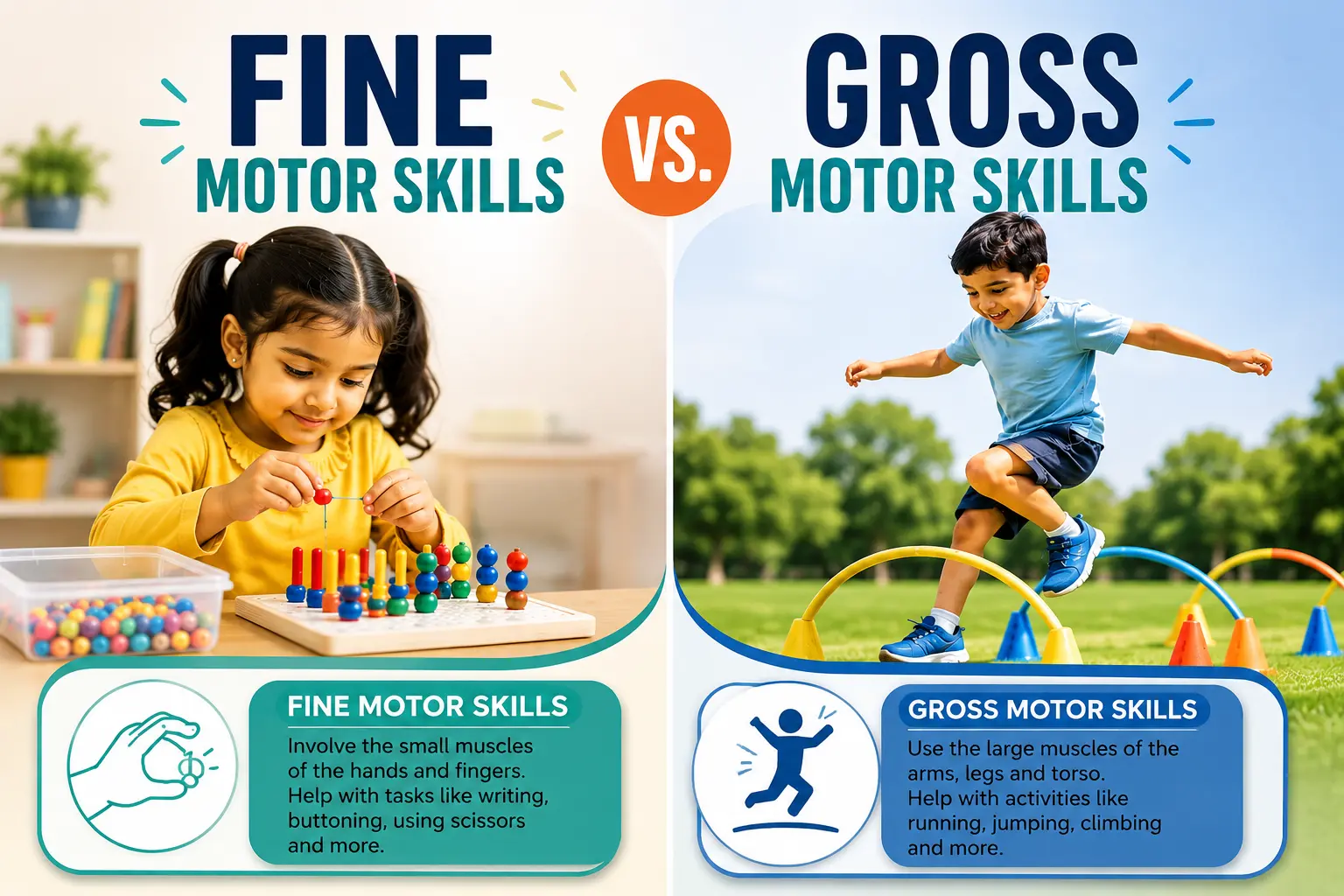
Watch a toddler chase a ball across the yard, then watch that same toddler try to pick up a single Cheerio between finger and thumb — and you’re looking at two completely different systems at work in their growing body. Both are “motor skills,” but they develop differently, show up in different milestones, and matter for different everyday tasks. If you’ve ever wondered why your child can climb a playground ladder like a pro but struggles to hold a crayon, you’re really asking about the difference between gross motor and fine motor skills.
Here’s a clear breakdown of what each one means, how they develop, and simple ways to support both at home.
What Are Gross Motor Skills?
Gross motor skills involve the large muscles of the body — arms, legs, torso, and core — and control movements like walking, running, jumping, climbing, and balancing. These are the skills that let a child move through and interact with the world around them.
Gross motor development typically follows a fairly predictable sequence:
- 0–12 months: rolling over, sitting up, crawling, pulling to stand
- 1–2 years: walking independently, climbing stairs with support, kicking a ball
- 2–3 years: running, jumping with both feet, climbing playground equipment
- 3–5 years: hopping on one foot, pedaling a tricycle, catching a ball, skipping
Because gross motor skills involve big, visible movements, they’re often the milestones parents notice first and celebrate loudest — that first wobbly step is a memorable moment for a reason.
What Are Fine Motor Skills?
Fine motor skills involve the small muscles of the hands, fingers, and wrists (and often work closely with eye coordination). These skills control precise, controlled movements like grasping, pinching, drawing, and manipulating small objects.
Fine motor milestones tend to look like this:
- 0–12 months: reaching for objects, transferring items hand to hand, developing a pincer grasp (thumb and finger)
- 1–2 years: stacking a few blocks, scribbling with a crayon, turning book pages
- 2–3 years: building taller towers, using child-safe scissors with help, stringing large beads
- 3–5 years: drawing shapes and simple figures, using scissors more independently, buttoning clothes, holding a pencil with a more mature grip
Fine motor skills tend to develop a bit more gradually and depend heavily on practice and repetition — which is why activities like coloring, playdough, and puzzles are more than just playtime; they’re skill-building.
Why the Difference Matters
Understanding the distinction isn’t just semantics — it helps you make sense of your child’s development as a whole picture rather than a single scorecard.
They develop on separate (but connected) timelines. A child can be ahead in gross motor skills — running and climbing early — while still working on the fine motor control needed to hold a spoon steady. That’s completely normal. The two systems mature somewhat independently, though they do rely on shared building blocks like core strength and body awareness.
They show up differently in daily life. Gross motor skills support things like walking to the bus stop, playing tag, and climbing into a car seat. Fine motor skills support things like zipping a jacket, using utensils, writing their name, and eventually typing. Both are essential for independence, just in different arenas.
They both matter for school readiness. Teachers often look for a mix of both: the gross motor stamina to sit upright through a lesson and the fine motor control to hold a pencil and cut along a line. A gap in either area can affect classroom confidence, so it’s worth paying attention to both — not just the more visible one.
Simple Ways to Support Both at Home
You don’t need special equipment or a structured program — everyday play covers most of the bases.
For gross motor skills:
- Set up an obstacle course with couch cushions and pillows
- Encourage outdoor play: running, climbing, riding a tricycle or balance bike
- Try simple games like Simon Says, freeze dance, or animal walks (bear crawl, crab walk)
- Practice throwing and catching a soft ball
For fine motor skills:
- Offer playdough or putty for squeezing, rolling, and pinching
- Provide crayons, chalk, and paper for open-ended drawing
- Use tongs or tweezers to sort pom-poms or small toys into cups
- Practice with child-safe scissors, lacing cards, or large beads for stringing
- Let them help with snack prep — spreading, pouring, or peeling
When to Check In With a Professional
Every child develops at their own pace, and a wide range of timing is completely normal. That said, it’s worth mentioning to your pediatrician if you notice your child consistently avoiding certain movements, struggling significantly more than peers with either gross or fine motor tasks, or losing skills they previously had. A pediatrician or pediatric occupational/physical therapist can offer reassurance or, if needed, connect you with early support — and earlier support tends to make the biggest difference.
The Takeaway
Gross motor skills get your child moving through the world; fine motor skills let them interact with the small details in it. Both develop through everyday play, both matter for independence and school readiness, and neither needs to develop perfectly in step with the other. The best thing you can do is offer varied, low-pressure opportunities to practice both — and let the climbing, coloring, and Cheerio-picking happen at their own pace.