

Speech Delay in Children: When to Act and How Therapies Help
Understanding Behaviour Modification in Children
Health Alliance
January 28, 2026
Child Developmental
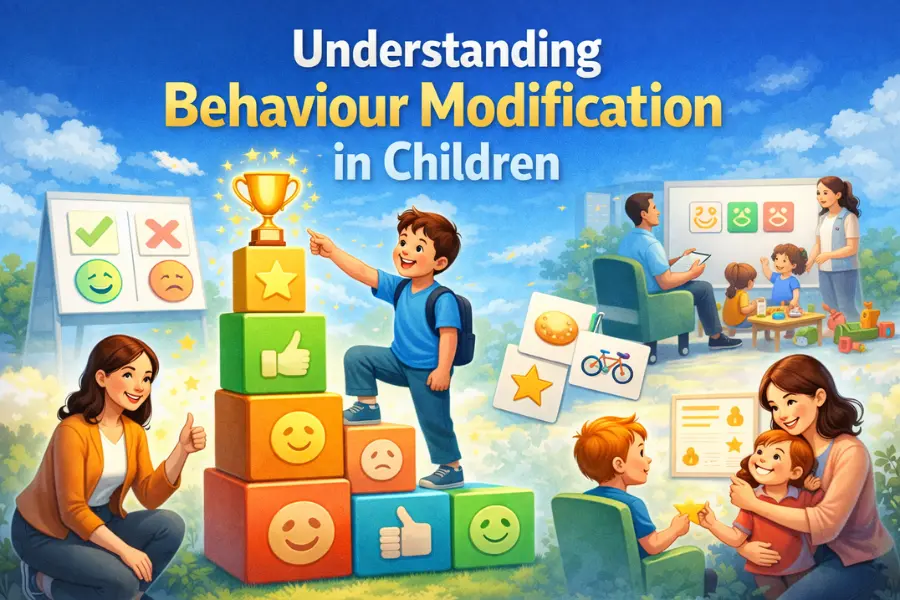
Behavior modification is a methodical, scientifically proven strategy used to promote positive behaviors and lessen difficult or undesirable behaviors in kids. Behavior modification, which has its roots in psychological concepts, particularly learning theory, focuses on how a child’s surroundings, experiences, and outcomes affect their behavior. When used carefully and regularly, it can help kids to develop independence, self-control, emotional control, and social skills—all of which are critical for success in the home, at school, and in society.
This article gives an in-depth overview of behavior modification in children, addressing its definition, fundamental concepts, methods, advantages, negative aspects, and the roles of parents, caregivers, and therapists.
What Is Behaviour Modification?
The term “behavior modification” describes a group of strategies intended to alter behavior patterns via monetary incentives, behavioral consequences, and environmental modifications. The basic idea is straightforward: behaviors that are rewarded are more likely to be repeated, whereas behaviors that are not reinforced or that result in suitable consequences tend to decline over time.
Modern behavior modification places more emphasis on skill development, positive reinforcement, and understanding the causes of a child’s behavior than punishment-based methods. The goal is to help a child develop healthier, more adaptive behaviors rather than to control them.
The Science Behind Behaviour Modification
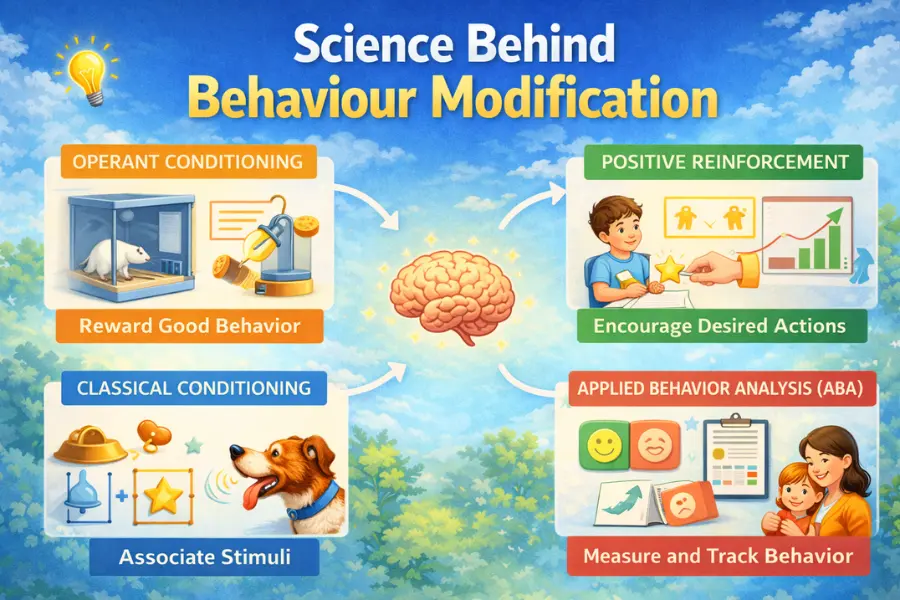
Behaviour modification is largely based on learning theory, particularly:
- Classical conditioning – learning by association.
- Operant conditioning – learning through consequences.
Children learn how to behave by observing what happens after they act in a certain way. For example:
- If a child receives praise for sharing toys, sharing is likely to increase.
- If a child avoids a task by throwing a tantrum, tantrums may continue unless the pattern is changed.
Understanding these patterns allows adults to shape behaviour intentionally and positively.
Why Behaviour Modification Is Important in Children
Children’s social, cognitive, and emotional development is still perpetual. Rather than being intentional misbehavior, challenging behaviors are frequently a means of communication. Modification of behavior aids by:
- Teaching appropriate ways to express emotions.
- Improving attention and focus.
- Enhancing social interaction and cooperation.
- Reducing aggression, defiance, or anxiety-driven behaviours.
- Building confidence and self-esteem.
It is especially helpful for children with developmental delays, learning difficulties, emotional regulation challenges, or neurodevelopmental conditions—but it is equally effective for typically developing children.
Core Principles of Behaviour Modification
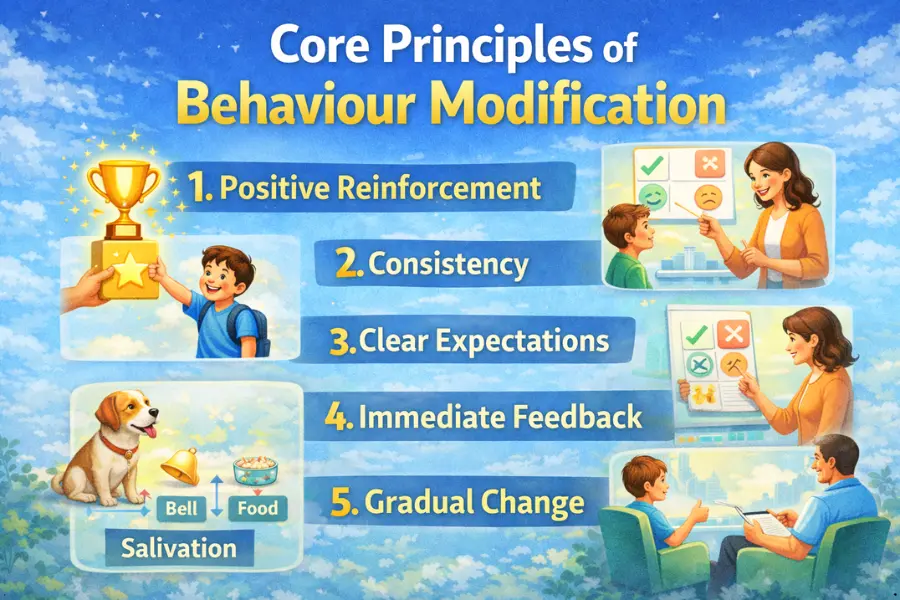
- Positive Reinforcement
Rewarding a desired behavior to make it more likely to happen again is known as positive reinforcement. Recognition, stickers, additional playtime, or privileges are examples of rewards.
Example:
A child is more likely to repeat a behavior if they receive verbal praise or a small reward for finishing their homework on time.
- Consistency
Consistency is critical. Children learn faster when rules, expectations, and consequences remain the same across settings and caregivers.
Example:
If hitting is not allowed at home but ignored at school, the child receives mixed signals and behaviour change becomes difficult.
- Clear Expectations
Children need to understand what is expected of them. Instructions should be age-appropriate, specific, and simple.
Instead of: “Behave properly.”
Say: “Use gentle hands and kind words.”
- Immediate Feedback
Feedback—positive or corrective—should be given immediately after the behaviour so the child can clearly link action and outcome.
- Gradual Change
Behaviour modification is a process. Small, consistent improvements are more effective and sustainable than sudden, strict changes.
Common Behaviour Modification Technique
- Positive Reinforcement Systems
These include reward charts, token systems, or point systems where children earn rewards for desired behaviours.
Benefits:
- Motivates children
- Makes progress visible
- Encourages responsibility
- Token Economy
In this system, children earn tokens (stars, points, coins) for positive behaviours, which can later be exchanged for rewards.
Example:
Earning stars for completing tasks and exchanging them for a favorite activity.
- Time-Out (Used Appropriately)
Time-out involves briefly removing a child from a reinforcing environment to help them calm down and reflect. It should never be used as humiliation or isolation.
Key rule:
Time-out should be calm, brief, and followed by guidance on appropriate behaviour.
- Shaping
Shaping reinforces small steps toward a larger goal.
Example:
Rewarding a child first for sitting at the table, then for eating one bite, then for completing a full meal.
- Modeling
Children learn by observing adults. Demonstrating calm communication, problem-solving, and emotional regulation is one of the most powerful behaviour modification tools.
- Functional Behaviour Assessment (FBA)
FBA involves identifying the purpose behind a behaviour—such as seeking attention, avoiding tasks, or sensory needs—so strategies can address the root cause rather than just the behaviour itself.
Role of Parents in Behaviour Modification
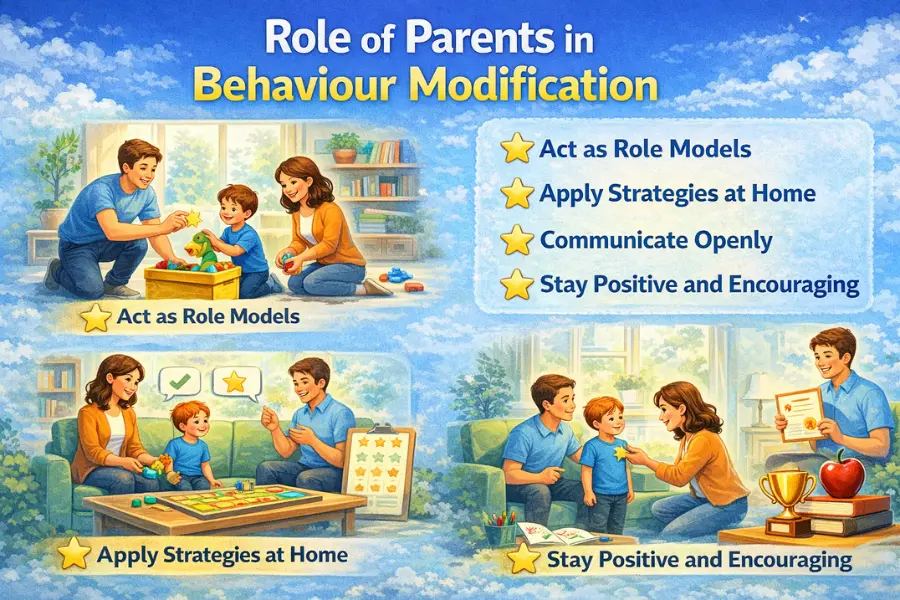
Parents play a central role in shaping a child’s behaviour. Effective behaviour modification at home includes:
- Spending quality time with the child
- Reinforcing positive behaviours more than correcting negative ones
- Setting realistic expectations based on age and ability
- Remaining calm and patient during challenges
- Collaborating with teachers or therapists when needed
A warm, supportive relationship enhances the success of any behaviour modification plan.
Role of Teachers and Schools
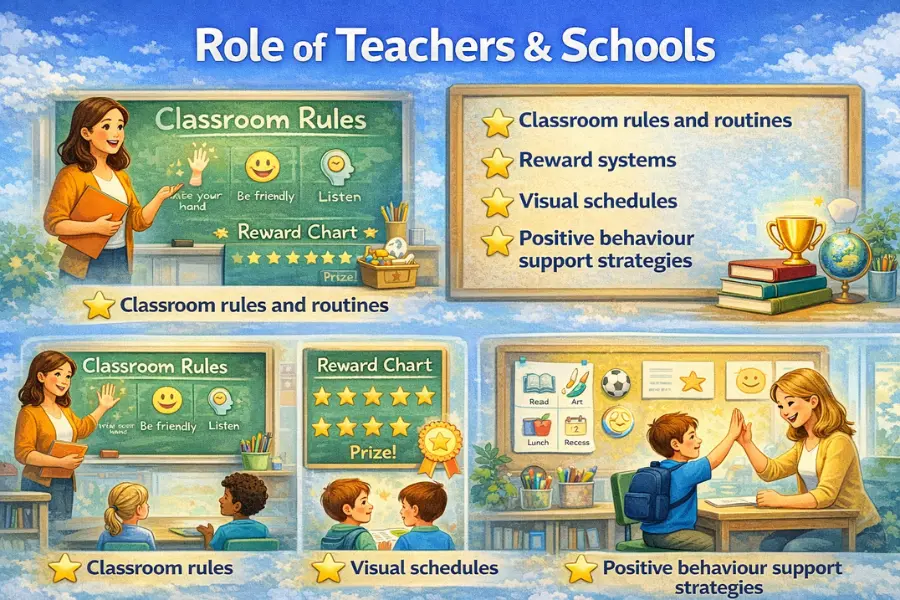
In classrooms, behaviour modification helps create structured, supportive learning environments. Teachers often use:
- Classroom rules and routines
- Reward systems
- Visual schedules
- Positive behaviour support strategies
When school and home strategies align, children experience greater consistency and faster improvement.
Behaviour Modification vs. Punishment
A common misconception is that behaviour modification equals punishment. In reality:
- Punishment focuses on stopping behaviour
- Behaviour modification focuses on teaching new behaviour
Punishment alone does not teach children what to do instead. Behaviour modification emphasizes skill development, emotional understanding, and long-term change.
Benefits of Behaviour Modification in Children
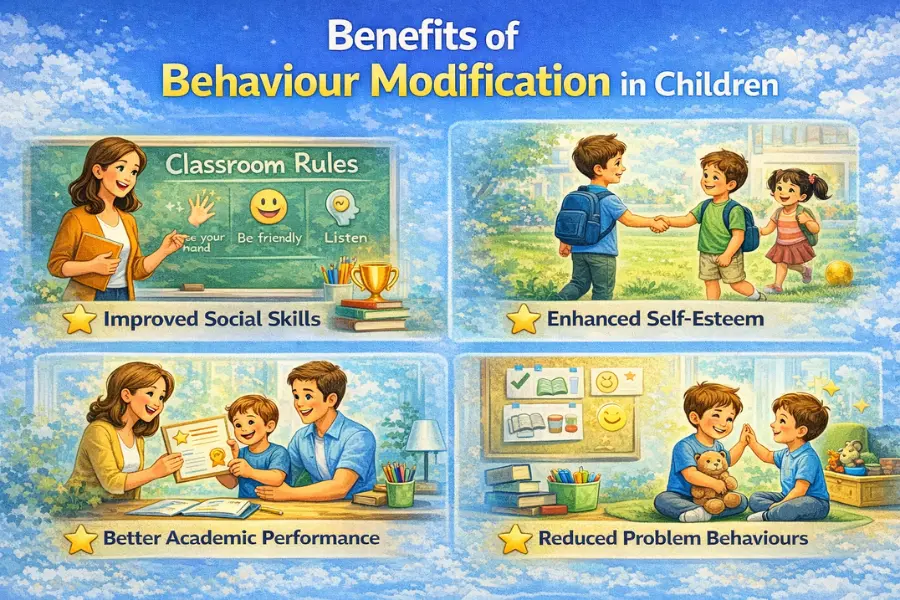
- Encourages self-discipline and responsibility
- Improves emotional regulation
- Strengthens parent-child and teacher-child relationships
- Builds social and communication skills
- Promotes independence and confidence
Over time, children internalize positive behaviours, reducing the need for external rewards.
Limitations and Challenges
While effective, behaviour modification is not a quick fix. Some challenges include:
- Requires time and consistency
- May not address underlying emotional or sensory needs alone
- Needs customization for each child
- Over-reliance on rewards can reduce intrinsic motivation if not faded gradually
For complex behavioural concerns, behaviour modification works best when combined with therapeutic support.
When to Seek Professional Help
Professional guidance may be helpful when:
- Behaviours interfere significantly with learning or relationships
- There is aggression, self-injury, or severe emotional distress
- Behaviour does not improve despite consistent efforts
- Developmental or emotional concerns are suspected
Professionals such as psychologists, occupational therapists, or behaviour specialists can design individualized intervention plans.
Conclusion
Parents, educators, and other caregivers can guide children’s behavior with empathy, structure, and evidence-based techniques when they have a better understanding of behavior modification. Behavior modification places more emphasis on teaching, encouraging, and fostering positive development than on “fixing” a child.
When used patiently, consistently, and compassionately, behavior modification helps kids develop lifelong skills that promote their general development and well-being, such as self-control, self-assurance, and positive social interactions.