

Speech Delay in Children: When to Act and How Therapies Help
How Much Screen Time Is Safe? A Practical Guide for Families
Health Alliance
December 22, 2025
Child Developmental
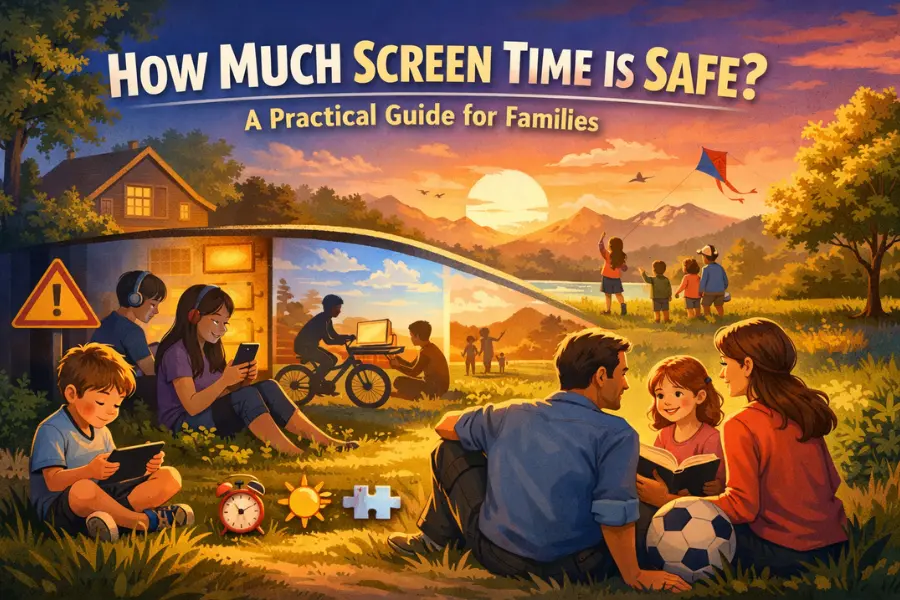
Screens are everywhere — smartphones, TVs, tablets, laptops, gaming devices, even smartwatches. For many children and adults, screens are a part of learning, communication, work, and entertainment. However, without healthy limits, screen time can negatively affect sleep, behavior, social skills, and physical health.
So how much screen time is actually safe? And how can families create a balanced digital lifestyle in a world of technology?
Let’s explore this step-by-step with research-based recommendations and practical tips for your home.
What Is Screen Time?
Screen time refers to any time spent on a digital device with a screen, including:
- Watching videos / TV shows
- Playing video games
- Using smartphones/tablets
- Online classes and digital homework
- Social media
- Browsing the internet
- Video calls
Screen time can be beneficial or harmful, depending on how, when, and how much it is used.
Why Is Managing Screen Time Important?
Excessive screen use is linked to:
- Delayed speech and communication skills
- Poor posture and motor skill development
- Reduced attention span and academic performance
- Mood and behavior challenges
- Sleep problems due to blue light exposure
- Social withdrawal and reduced family interaction
- Obesity and reduced physical activity
Even adults experience eye strain, headaches, stress, and time management issues due to high digital dependency.
Balanced screen time ensures that digital tools support — not replace — physical activity, creativity, and real-life relationships.
Recommended Screen Time Limits by Age
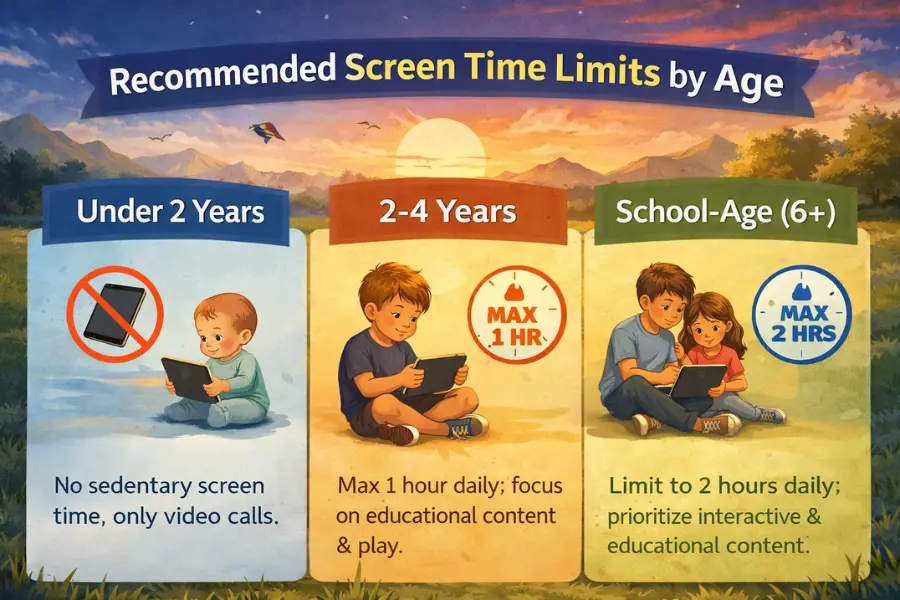
Below are widely accepted guidelines from pediatric and WHO (World Health Organizations) around the world:
Age Group | Recommended Safe Screen Time |
Under 2 Years | No sedentary screen time (TV, games), only video calls. |
2-4 Years | Max 1 hour of sedentary screen time, but less is ideal, with focus on high-quality educational content alongside play. |
School-Age (6+) | Limit recreational screen time to around 2 hours daily, prioritizing interactive and educational content, and ensuring it doesn’t disrupt sleep or physical activity. |
6–12 years | 1–2 hours/day of quality screen time |
13–18 years | 2–3 hours/day outside academics |
Adults | No strict limit — but aim for digital balance and screen breaks |
Types of Screen Time: Not All Screens Are Equal
Not all screen activities have the same impact.
Type | Example Activities | Impact |
Passive | Watching cartoons, endless scrolling | More harmful — reduces brain engagement |
Interactive | Learning apps, problem-solving games | Better for development |
Social | Video calls, collaborative gaming | Boosts communication when supervised |
Educational | Online classes, STEM apps | Supports learning and skills |
The goal is to reduce passive time and increase active, supervised, and meaningful screen use.
How Screen Time Affects Children at Different Ages
Babies & Toddlers (0–2 years)
Risk of:
- Delayed language development
- Limited real-world exploration
- Reduced bonding and social learning
Focus on:
- Human interaction
- Play-based learning
- Talking, singing, storytelling
Screens should not replace real-life learning.
Preschoolers (3–5 years)
Too much screen time can cause:
- Hyperactivity
- Poor emotional control
- Sleep disturbances
Focus on:
- Audio-visual learning with guidance
- Educational shows and apps
- Physical play and hands-on activities
School-age Children & Teens (6–18 years)
Common concerns:
- Cyberbullying & social media pressure
- Distraction from academics
- Gaming addiction
- Vision issues and headaches
Focus on:
- Device-free meals & bedtime
- Screen time balanced with sports & social play
- Open family communication about online safety
Sleep and Screen Time: A Critical Connection
Blue light from screens suppresses melatonin, the sleep hormone.
Even 30 minutes of screen use before bed can:
- Delay sleep
- Reduce sleep quality
- Cause daytime fatigue and irritability
Rule:
No screens 1 hour before bedtime
Try calm activities like:
eading, soft music, puzzles, storytelling
Signs of Too Much Screen Time
Watch for the following behaviors:
- Tantrums when device is removed
- Loss of interest in off-screen activities
- Social withdrawal or reduced communication
- Difficulty sleeping or waking up
- Constantly asking for devices
- Poor posture and frequent headaches
- Declining academic performance
- Aggressive or impulsive reactions after gaming
If you recognize multiple signs, screen habits likely need adjustment.
Practical Tips to Create Healthy Screen Habits
1. Use the 20-20-20 Rule
Every 20 minutes of screen time → look 20 feet away → for 20 seconds
- Prevents eye strain
- Helps posture and attention
2. Create Device-Free Zones
Examples:
- Dining table
- Bedrooms
- Car rides
- Family time areas
Supports bonding and better communication.
3. Encourage Outdoor & Physical Play
Children need at least 60 minutes of active play daily to support:
- Motor coordination
- Healthy weight
- Emotional wellbeing
4. Co-View and Co-Play
Join kids on their screens:
- Discuss content
- Encourage learning
- Build trust around technology
5. Schedule Screen Time
Predictable routines prevent arguments.
Example: Screens allowed only after homework, chores, and outdoor play.
6. Model Good Behavior
Kids copy adults.
If parents scroll constantly, children will too.
Make it a family commitment.
Digital Safety: Protecting Children Online
As children use the internet, they need guidance to stay safe. Teach them:
- Never share personal information
- Report strangers or uncomfortable content
- Limit social media usage
- Use privacy settings
- Time limits for gaming and group chats
Parents should monitor:
- Friend lists
- App permissions
- Content ratings
- Screen time reports
Technology rules work best when everyone understands why they matter.
How to Talk to Kids About Screen Time
Instead of saying “No more screens,” try:
- “Let’s take a break so our eyes can rest.”
- “Screens are for learning and fun — but we also need family and playtime.”
- “One more episode, then we switch to puzzles.”
Positive guidance builds cooperation, not resistance.
The Goal: Balance, Not Banning
Technology is part of modern life — learning to use it responsibly is key.
A healthy digital lifestyle includes a balance of:
- Movement
- Sleep
- Outdoor Play
- Family Interaction
- Creative Activities
- Learning
- Limited passive screen use
Screens should enhance life — not control it.
Final Thoughts
“How much screen time is safe?” is not just about minutes — it’s about quality, purpose, and balance.
By setting healthy boundaries and using screens thoughtfully, families can enjoy the benefits of technology while protecting physical, social, and emotional health.
Small changes, like reducing screens before bedtime or adding outdoor play each day, can make a big difference in your family’s wellbeing — today and in the future.