

Speech Delay in Children: When to Act and How Therapies Help
Speech Delay in Children: When to Act and How Therapies Help
Health Alliance
March 7, 2026
Child Developmental
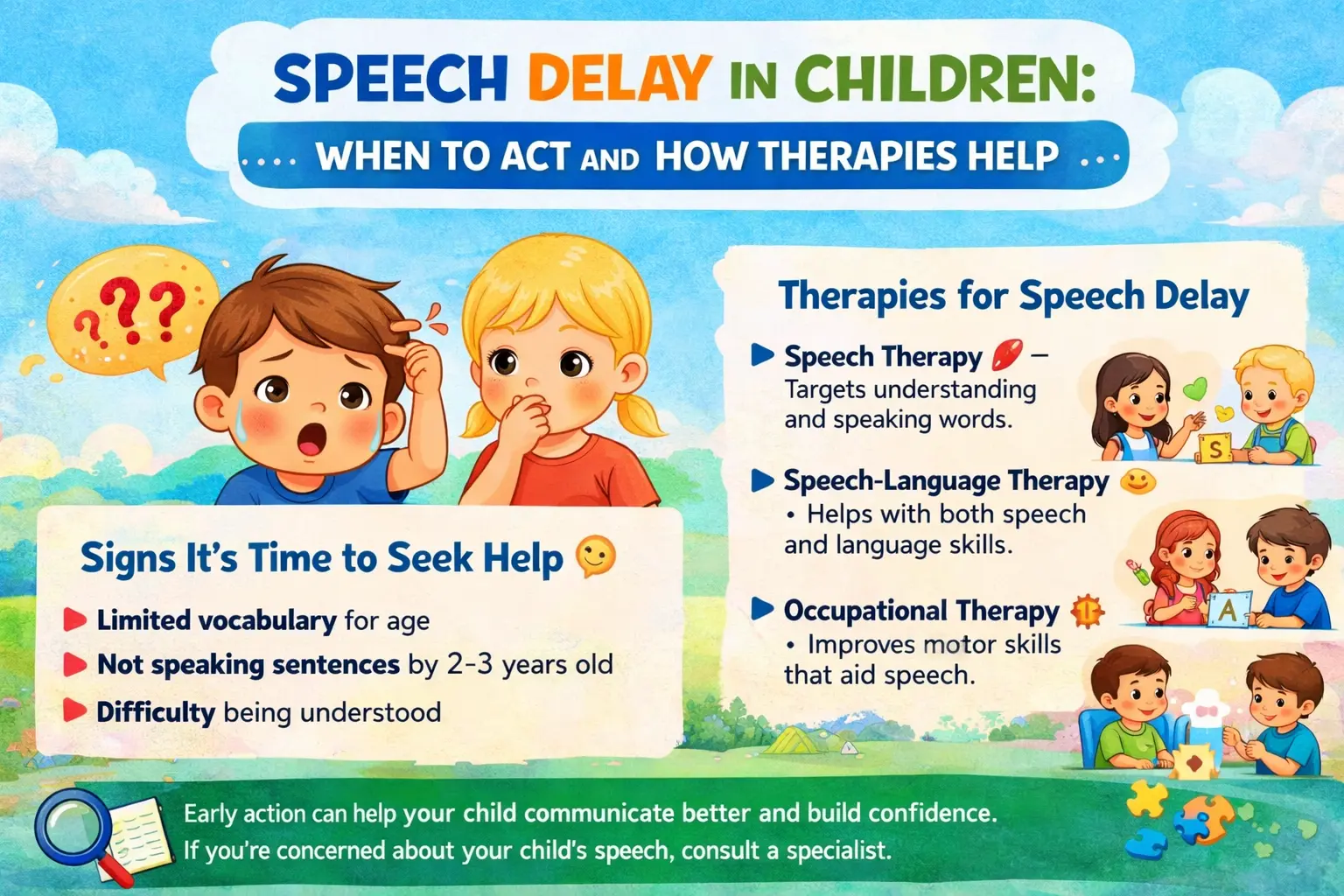
Speech and language development are crucial to a child’s overall development. They impact how children communicate their needs, understand others, form relationships, and succeed later in life in education and society. While every child develops at their own pace, delays in speech and language can sometimes indicate the need for professional assistance.
Many parents find it difficult to determine whether their child is simply a “late talker” or has a true speech delay. This article help to parents understand when to take action, recognize early warning signs, and learn how therapy can help children with speech delays.
Understanding Speech Delay
Speech delay refers to a condition where a child’s speech and language development occurs more slowly than expected for their age. It may affect:
- Expressive language (what the child can say)
- Receptive language (what the child can understand)
- Speech clarity (how clearly sounds and words are spoken)
A speech delay does not always mean a serious disorder, but early identification is crucial to prevent future challenges in learning, behavior, and social interaction.
Normal Speech Milestones: A General Guide
Children grow in different ways, but there are some major milestones that help parents track their progress:
- By 12 months: Babbling, responding to name, using gestures, saying simple words like “mama” or “dada”
- By 18 months: Using 10–20 meaningful words, understanding simple instructions
- By 2 years: Combining two words, vocabulary of 50+ words, naming common objects
- By 3 years: Speaking in short sentences, being understood by familiar adults
- By 4 years: Clear speech, storytelling, answering simple questions
If a child consistently misses these milestones, it may be time to seek professional advice.
Signs That Indicate It’s Time to Act
Parents should consider consulting a specialist if they notice:
- Limited or no babbling in infancy
- Not using words by 18 months
- Difficulty understanding instructions
- Poor eye contact or limited social interaction
- Frustration, tantrums, or behavioral issues due to communication difficulty
- Speech that is difficult to understand compared to peers
Early action can make a significant difference. Waiting for a child to “outgrow” a delay may lead to missed opportunities for early intervention.
Common Causes of Speech Delay
Speech delay can occur due to a variety of reasons, including:
- Hearing Difficulties
Undiagnosed hearing loss or frequent ear infections can impact speech development.
- Developmental Conditions
Speech delay may be associated with autism spectrum disorder, global developmental delay, or intellectual disability.
- Oral-Motor Challenges
Weakness or coordination issues in the muscles used for speech can affect clarity.
- Environmental Factors
Limited verbal interaction, excessive screen time, or reduced opportunities for communication may contribute.
- Neurological or Genetic Factors
In some cases, underlying neurological conditions affect speech and language development.
Understanding the cause helps therapists design a targeted and effective treatment plan.
Why Early Intervention Matters
The first few years of life are crucial for brain development. During this time, the brain is highly adaptable and responsive to learning. Early speech intervention can:
- Improve communication skills faster
- Reduce frustration and behavioral problems
- Enhance social interaction and confidence
- Support academic readiness
- Prevent secondary emotional or learning difficulties
Research consistently shows that children who receive therapy early have better long-term outcomes.
How Speech Therapy Helps Children with Speech Delay
Speech therapy is a structured, evidence-based intervention designed to improve communication skills. It is tailored to the child’s age, needs, and abilities.
Assessment and Goal Setting
Therapy begins with a comprehensive assessment to understand the child’s strengths and challenges. Based on this, therapists set realistic, measurable goals.
Improving Expressive Language
Children are encouraged to:
- Build vocabulary
- Use words, phrases, and sentences
- Express needs, feelings, and ideas clearly
Enhancing Receptive Language
Therapy helps children:
- Understand instructions
- Follow routines
- Comprehend questions and stories
Speech Sound Development
For children with unclear speech, therapists work on:
- Pronunciation of sounds
- Sound sequencing
- Speech clarity and intelligibility
Play-Based and Child-Friendly Techniques
Sessions often use games, toys, songs, and stories to keep children engaged and motivated.
The Role of Parents in Speech Therapy
Parental involvement is a key factor in successful therapy outcomes. Speech therapists guide parents on how to:
- Encourage communication at home
- Use daily routines as learning opportunities
- Model correct speech without pressure
- Reduce screen time and increase interaction
Consistent practice at home reinforces skills learned during therapy sessions.
Multidisciplinary Support: When Speech Therapy Isn’t Alone
Some children benefit from additional therapies alongside speech therapy, such as:
- Occupational therapy for sensory processing and attention
- Behavioral therapy for social communication and behavior regulation
- Clinical psychology support for emotional and developmental concerns
A collaborative, multidisciplinary approach ensures holistic development.
Common Myths About Speech Delay
“Boys talk late, it’s normal.”
While some variation exists, significant delays should not be ignored.
“My child understands everything, so speech will come later.”
Understanding alone does not guarantee expressive language development.
“Speech delay will fix itself.”
Some children do catch up, but many require support to do so effectively.
Dispelling these myths helps parents take timely and informed action.
When to Seek Professional Help
If you’re unsure about your child’s speech development, it’s always better to seek guidance early rather than waiting. A professional assessment doesn’t label your child—it provides clarity, direction, and peace of mind.
Final Thoughts
Speech delays can be challenging for both children and parents, but with the right support, progress is absolutely possible. Taking early action, choosing evidence-based therapy, and staying actively involved in your child’s journey can significantly improve communication and confidence.
Every word a child learns is a step toward independence, connection, and self-expression. With timely intervention and consistent support, children with speech delays can thrive and reach their full potential.