

Toilet Training Problems: When to Seek Professional Help
10 Activities to Improve Fine Motor Skills at Home
Health Alliance
September 7, 2026
Child Developmental
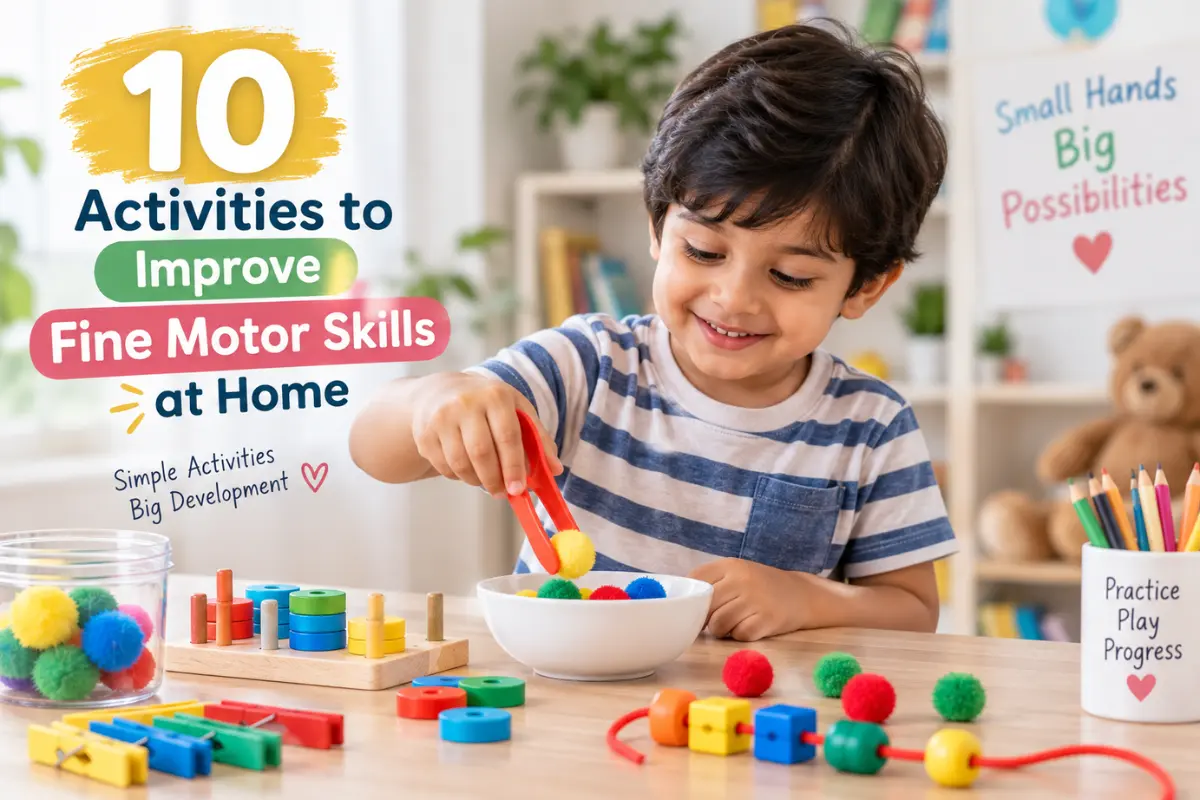
Watching a child struggle to hold a crayon, button a shirt, or use scissors can be worrying for any parent. The good news is that fine motor skills — the small muscle movements in the hands and fingers — develop through practice, and some of the best practice happens through everyday play. You don’t need expensive toys or a therapist’s office to build these skills. With a few household items and 15–20 minutes a day, you can turn your living room into a fine motor skills workshop.
This guide walks through 10 simple, effective fine motor skills activities you can start using at home today, why each one works, and how to adjust them for different ages and ability levels.
What Are Fine Motor Skills, and Why Do They Matter?
Fine motor skills involve the coordination of small muscles in the hands, fingers, and wrists, working together with the eyes (hand-eye coordination). These skills form the foundation for tasks like:
- Writing and drawing
- Using utensils and getting dressed
- Cutting with scissors
- Typing and using devices
- Personal care tasks like brushing teeth or tying shoes
Delayed fine motor development can affect a child’s confidence in the classroom and independence at home, which is why building these skills early through play is so valuable.
10 Fine Motor Skills Activities to Try at Home
- Playdough Squeeze and Sculpt
Rolling, pinching, and squeezing playdough strengthens the hand muscles used for grip and pencil control. Have your child roll snakes, flatten balls into pancakes, or hide small objects (like buttons) inside for them to pinch out.
Tip: Add resistance by using stiffer, homemade playdough for an extra strength-building challenge.
- Clothespin Clip Activities
Clipping clothespins onto the edge of a box, a piece of cardboard, or a clothesline builds the pincer grip needed for holding a pencil correctly. Try color-matching clothespins to painted dots for an added learning component.
- Tweezer and Pom-Pom Sorting
Give your child a pair of child-safe tweezers or tongs and a bowl of pom-poms, cotton balls, or dried beans. Ask them to sort the items by color into separate cups. This activity isolates finger movements away from the whole hand, which is key for precise pencil grip.
- Bead Threading and Lacing Cards
Stringing beads onto a shoelace or pipe cleaner develops hand-eye coordination and bilateral coordination (using both hands together). For younger children, lacing cards with large holes are an easier starting point.
- Cutting Practice with Safety Scissors
Scissor skills are one of the clearest markers of fine motor development. Start with cutting playdough or straws before moving on to straight lines, then curves, on paper. [INTERNAL LINK: /scissor-skills-development-guide “learn more about scissor skill milestones by age”]
- Water Droppers and Sponge Squeezing
Using an eyedropper to transfer colored water between containers, or squeezing a wet sponge to fill a cup, builds the hand strength needed for tasks like using a stapler or opening containers.
- Sticker Peeling and Placing
Peeling small stickers off their backing and placing them on a page requires a refined pincer grasp and finger isolation. This is a low-effort activity that keeps kids engaged for long stretches.
- Building with Small Blocks or LEGO
Snapping small building blocks together, especially LEGO or similar interlocking bricks, strengthens finger and thumb muscles while encouraging planning and problem-solving.
- Puzzle Time
Manipulating puzzle pieces — grasping, rotating, and fitting them into place — combines fine motor control with spatial reasoning. Choose puzzles with knobs for younger children and standard flat pieces for older ones.
- Simple Sewing or Lacing Boards
Threading yarn through a pre-punched cardboard shape (a “sewing board”) introduces the back-and-forth motion used in real sewing and builds sustained hand control over time.
How to Make These Activities Part of Your Routine
- Keep sessions short: 10–15 minutes is enough to build a habit without causing frustration.
- Rotate activities weekly: This keeps engagement high and targets different muscle groups.
- Follow your child’s lead: If an activity feels too hard, scale it back rather than pushing through.
- Pair with daily tasks: Let kids practice buttoning their own coat or pouring their own cereal — real-life tasks are fine motor practice too.
- Writing and drawing
- Using utensils and getting dressed
- Cutting with scissors
- Typing and using devices
- Personal care tasks like brushing teeth or tying shoes
Delayed fine motor development can affect a child’s confidence in the classroom and independence at home, which is why building these skills early through play is so valuable.
FAQ's
- At what age should fine motor skills activities start?
Most children benefit from fine motor activities starting around 12–18 months, with complexity increasing through the preschool and early elementary years.
- How often should we practice fine motor skills at home?
Short daily sessions of 10–15 minutes tend to be more effective than infrequent, longer sessions, since consistency builds muscle memory.
- When should I be concerned about my child’s fine motor development?
If a child consistently struggles with age-appropriate tasks like holding utensils, using scissors, or buttoning clothes, it may be worth consulting a pediatrician or occupational therapist.
- Can adults benefit from fine motor skills activities too?
Yes. Adults recovering from injury, stroke, or living with conditions like arthritis or Parkinson’s often use similar activities (like putty exercises or bead threading) as part of hand therapy.
- Do fine motor skills activities help with handwriting?
Yes. Strengthening hand and finger muscles through play directly supports the grip strength and control needed for legible, comfortable handwriting.