

Toilet Training Problems: When to Seek Professional Help
Delayed Milestones in Childhood: Understanding, Causes, and Early Intervention
Health Alliance
April 15, 2026
Child Developmental
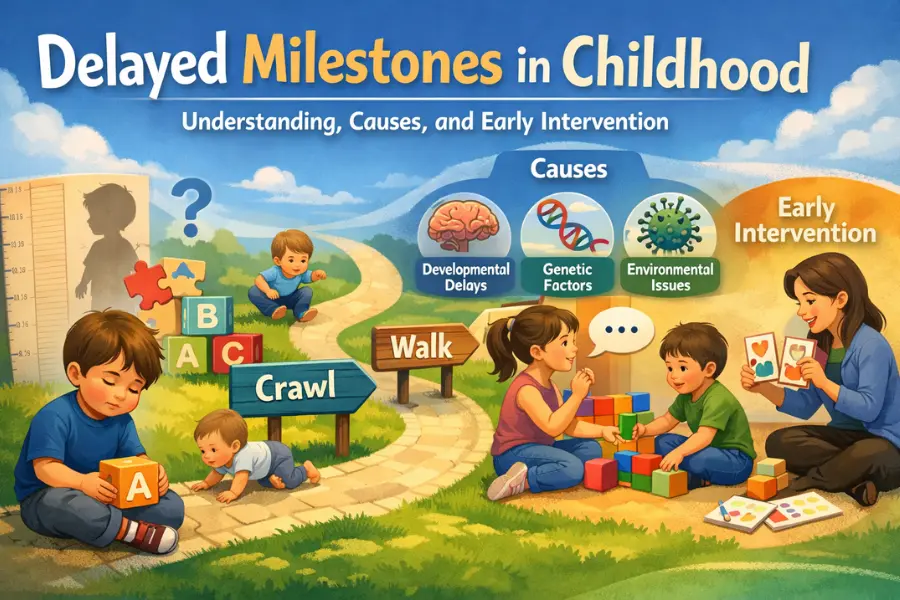
Childhood is a crucial phase for growth and development, during which children acquire specific skills known as “developmental milestones.” These milestones encompass physical, cognitive, social, emotional, and language-related skills, which typically emerge within a specific age range. However, some children do not reach these milestones on schedule; this condition is referred to as “delayed milestones” or “developmental delay.” Understanding developmental delays is essential to ensure early identification, enable timely intervention, and facilitate the child’s optimal development.
What Are Developmental Milestones?
Developmental milestones are abilities that most children can perform by a certain age. These are categorized into five main domains:
- Gross Motor Skills: Sitting, crawling, walking, jumping
- Fine Motor Skills: Grasping objects, drawing, using utensils
- Speech and Language Skills: Babbling, speaking words, forming sentences
- Cognitive Skills: Problem-solving, understanding instructions, memory
- Social and Emotional Skills: Smiling, interacting, expressing emotions
Each child develops at their own pace, but there are general timelines that help track normal development.
What is Delayed Milestone?
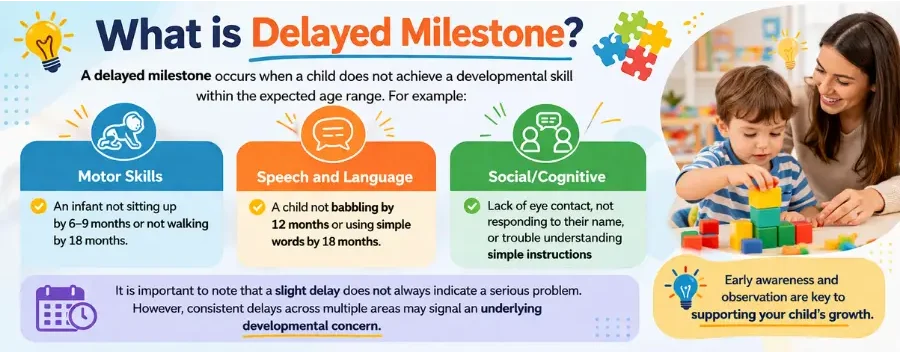
A delayed milestone occurs when a child does not achieve a developmental skill within the expected age range. For example:
- Motor Skills: An infant not sitting up by 6–9 months or not walking by 18 months.
- Speech and Language: A child not babbling by 12 months or using simple words by 18 months.
- Social/Cognitive: Lack of eye contact, not responding to their name, or trouble understanding simple instructions
It is important to note that a slight delay does not always indicate a serious problem. However, consistent delays across multiple areas may signal an underlying developmental concern.
Types of Developmental Delays
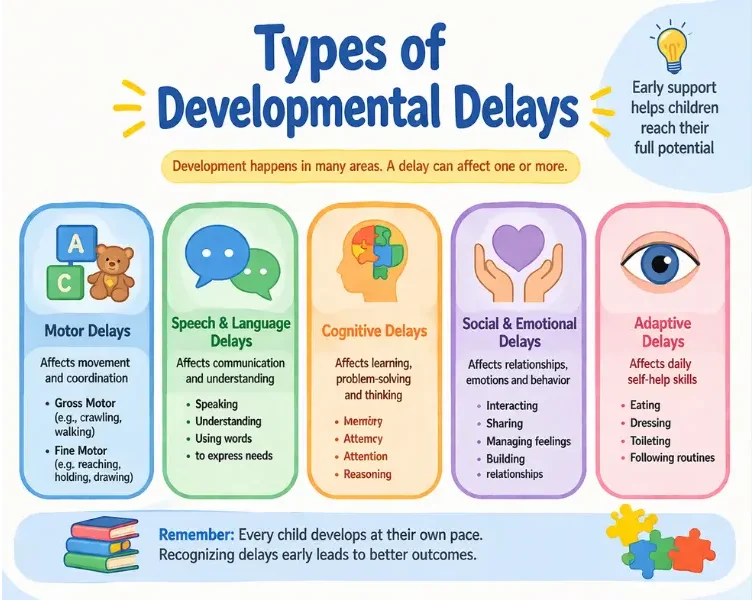
Developmental delays can be categorized based on the affected domain:
- Motor Delay
This includes delays in physical movement such as rolling over, sitting, crawling, or walking. It may involve poor muscle strength or coordination.
- Speech and Language Delay
Children may have difficulty understanding language or expressing themselves. They might not babble, use gestures, or form words at expected ages.
- Cognitive Delay
This affects a child’s ability to think, learn, and solve problems. It may be noticed when a child struggles with basic concepts or instructions.
- Social and Emotional Delay
Children may avoid interaction, have limited eye contact, or struggle to respond to social cues.
- Global Developmental Delay
When a child shows delays in two or more developmental areas, it is referred to as global developmental delay.
Causes of Delayed Milestones

Delayed milestones can result from a variety of factors, including:
- Genetic Factors
Conditions such as Down syndrome or other chromosomal abnormalities can affect development.
- Premature Birth
Babies born before 37 weeks may take longer to reach milestones due to underdeveloped organs.
- Neurological Conditions
Brain-related conditions such as cerebral palsy or brain injury can impact movement and learning.
- Environmental Factors
Lack of stimulation, poor nutrition, neglect, or limited interaction can contribute to delays.
- Hearing or Vision Problems
Undiagnosed sensory issues can affect speech, learning, and social interaction.
- Autism Spectrum Disorder (ASD)
Children with ASD may show delays in communication and social interaction.
- Medical Conditions
Chronic illnesses, infections, or metabolic disorders can also impact development.
Early Signs of Developmental Delay
Parents and caregivers should watch for warning signs such as:
- Poor head control by 4 months
- Not sitting without support by 9 months
- Not crawling by 12 months
- Not walking by 18 months
- No meaningful words by 16–18 months
- Lack of eye contact or response to name
- Difficulty interacting with others
- Loss of previously acquired skills
Recognizing these signs early is crucial for intervention.
Importance of Early Diagnosis
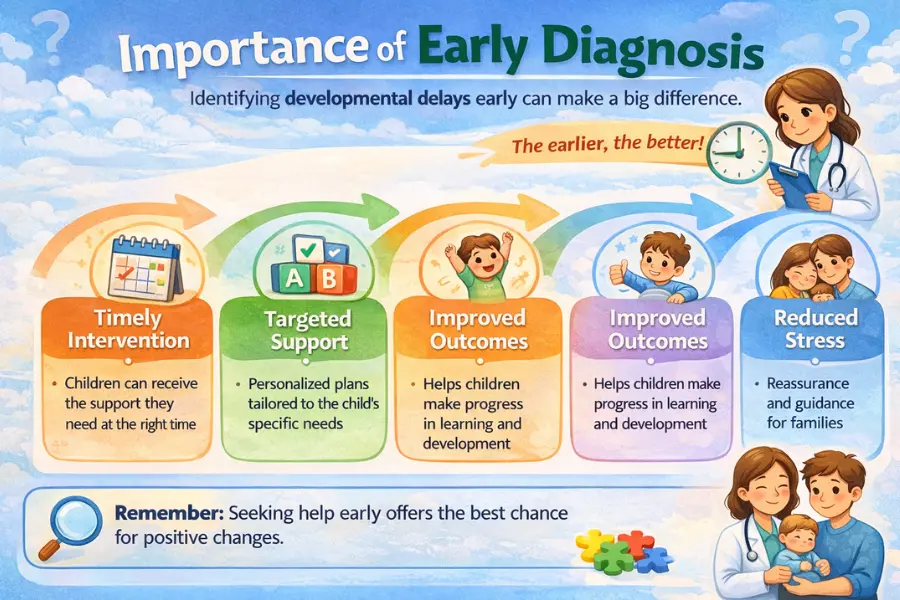
Early diagnosis plays a vital role in managing developmental delays. The earlier a delay is identified, the better the chances of improvement. Pediatricians often use developmental screening tools to assess a child’s progress during routine check-ups.
Early detection helps in:
- Identifying underlying causes
- Planning appropriate therapies
- Improving long-term outcomes
- Supporting parents with guidance and resources
Assessment and Diagnosis
Diagnosis typically involves:
- Developmental Screening: Basic evaluation during pediatric
- Assessment: Conducted by specialists such as pediatric neurologists, psychologists, or therapists
- Hearing and Vision Tests
- Medical and Family History Review
Standardized tools and observations are used to determine the child’s developmental level.
Treatment and Intervention
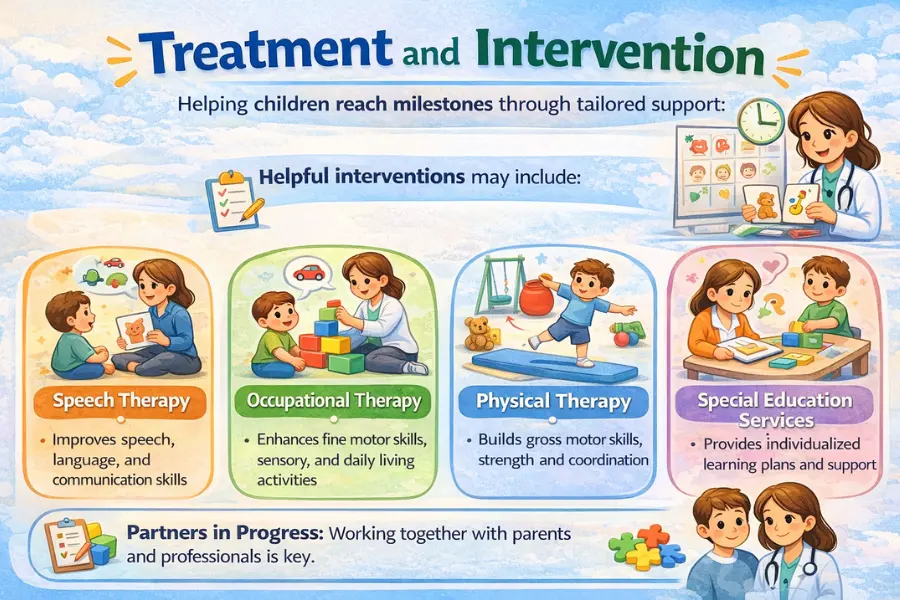
There is no one-size-fits-all treatment for delayed milestones. Intervention depends on the child’s specific needs.
- Early Intervention Programs
These programs provide structured support for children under 6 years, focusing on improving developmental skills.
- Physiotherapy
Helps improve motor skills, balance, and coordination.
- Occupational Therapy
Focuses on fine motor skills, daily activities, and sensory integration.
- Speech Therapy
Helps with communication, language development, and understanding.
- Behavioral Therapy
Useful for children with social or emotional challenges, especially in autism.
- Special Education
Customized learning strategies to support cognitive development.
Role of Parents and Caregivers
Parents play a important role in supporting a child with delayed milestones. Some effective strategies include:
- Engaging in regular play and interaction
- Talking, reading, and singing to the child
- Encouraging physical activities
- Providing a stimulating and safe environment
- Following therapy recommendations consistently
- Monitoring progress and celebrating small achievements
Consistency and patience are key.
Prevention and Awareness
While not all developmental delays can be prevented, certain steps can reduce risks:
- Proper prenatal care
- Adequate nutrition for mother and child
- Regular pediatric check-ups
- Timely vaccinations
- Avoiding exposure to toxins
- Early stimulation through play and communication
Raising awareness among parents and communities is essential to ensure early identification and support.
When to Seek Help
Parents should consult a healthcare professional if they notice:
- Significant delay in achieving milestones
- Loss of previously learned skills
- Lack of response to sound or visual stimuli
- Behavioral concerns or unusual patterns
It is always better to seek guidance early rather than waiting.
Conclusion
Delays in developmental milestones during childhood can be a source of concern for parents; however, with timely identification and appropriate interventions, many children can catch up with their peers and lead healthy, fulfilling lives. Every child develops at their own pace, but understanding the general timeline of development helps in recognizing when additional support may be required.
The foundation of this process lies in awareness, timely action, and a supportive environment. Through the right blend of medical care, therapy, and parental involvement, children facing developmental delays can reach their full potential.