

10 Activities to Improve Fine Motor Skills at Home
Autism vs ADHD: Understanding the Difference
Health Alliance
June 1, 2026
ADHD, Autism
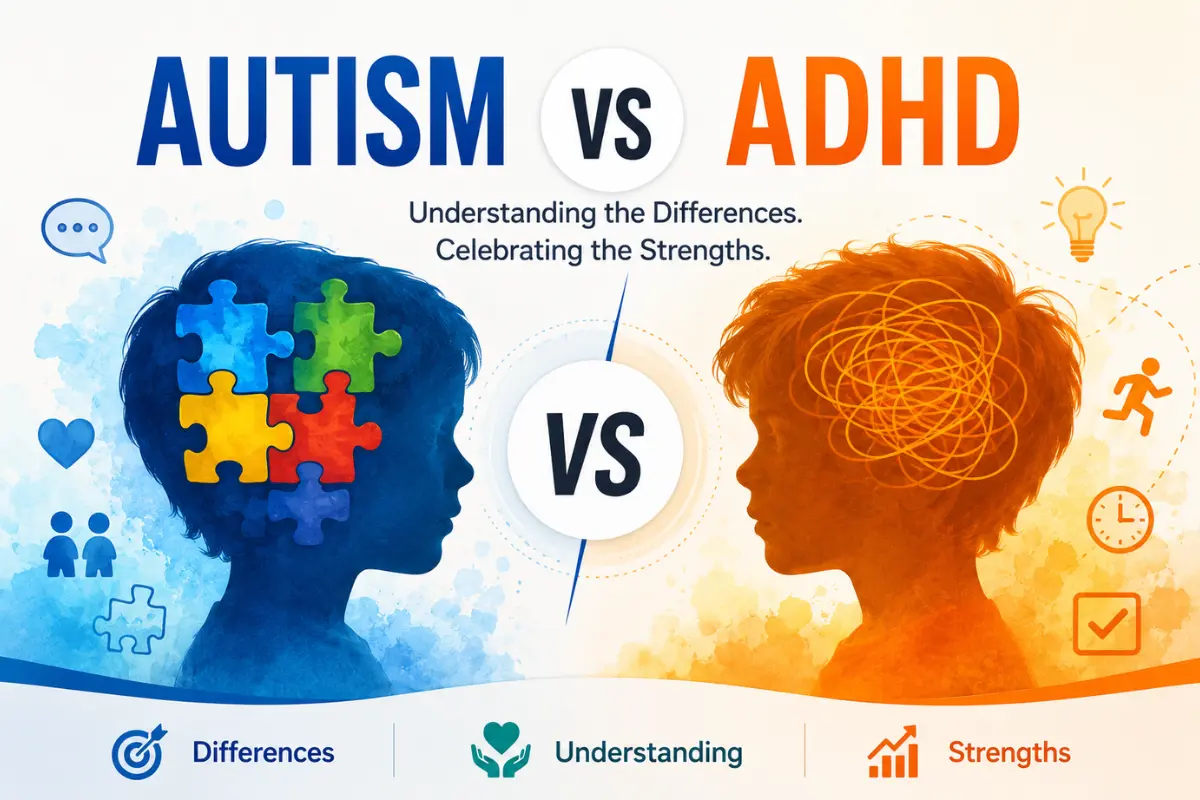
In recent years, awareness regarding neurodevelopmental conditions such as Autism Spectrum Disorder (ASD) and Attention-Deficit/Hyperactivity Disorder (ADHD) has increased significantly. However, many parents, teachers, and even caregivers still struggle to distinguish between autism and ADHD, as some symptoms appear similar. Children may experience difficulties with focusing, regulating their emotions, communicating, or socializing, which often leads to confusion between these two conditions.
Although autism and ADHD may share some overlapping symptoms, they remain distinct conditions, each with its own unique characteristics, underlying causes, and treatment approaches. Understanding these differences is crucial for timely diagnosis, appropriate support, and effective intervention.
What is Autism Spectrum Disorder (ASD)?
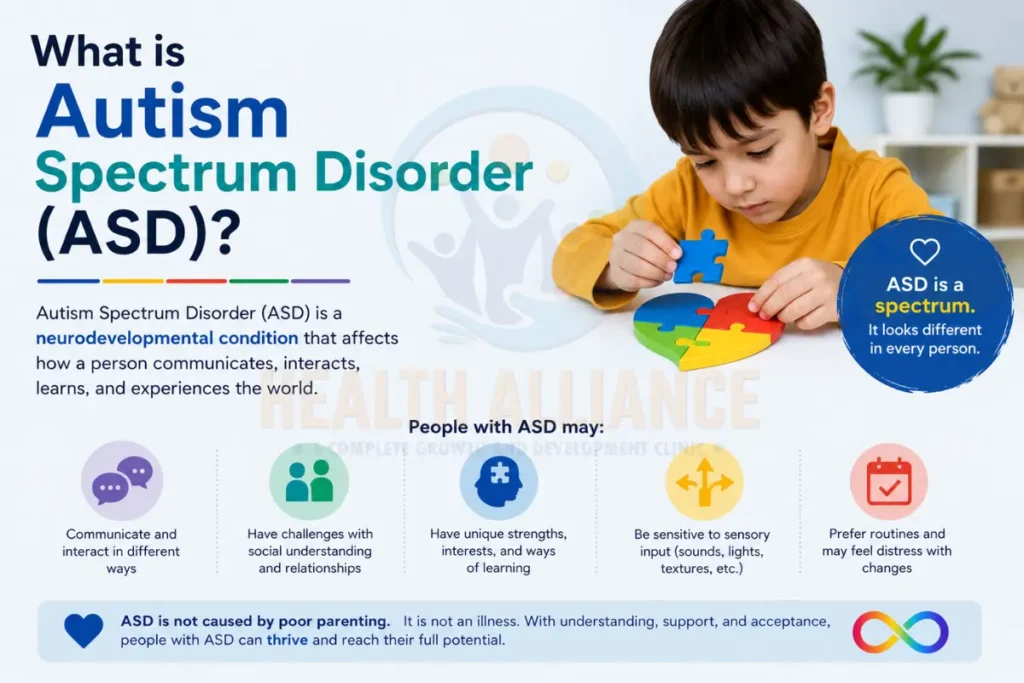
Autism spectrum disorder (ASD) is a complex developmental disorder characterized by repetitive behavior, limited interests, and ongoing difficulties with social interactions. Although autism is thought to be a lifelong illness, each person with autism has a different need for services and support due to these difficulties.
The Centers for Disease Control and Prevention say that autism spectrum disease affects one in 36 children.
Autism usually appears during early childhood and may affect how a child understands the world around them.
Common Signs of Autism
- Less interest-sharing with others.
- Difficulty appreciating their own & others’ emotions.
- Aversion to maintaining eye contact.
- Inability to effectively use nonverbal communication.
- Stilted or scripted speech.
- Interpreting abstract ideas literally.
- Difficulty making new friends or keeping them.
For example, a child with autism may repeatedly line up toys, avoid eye contact, or become upset when daily routines change unexpectedly.
What is ADHD?
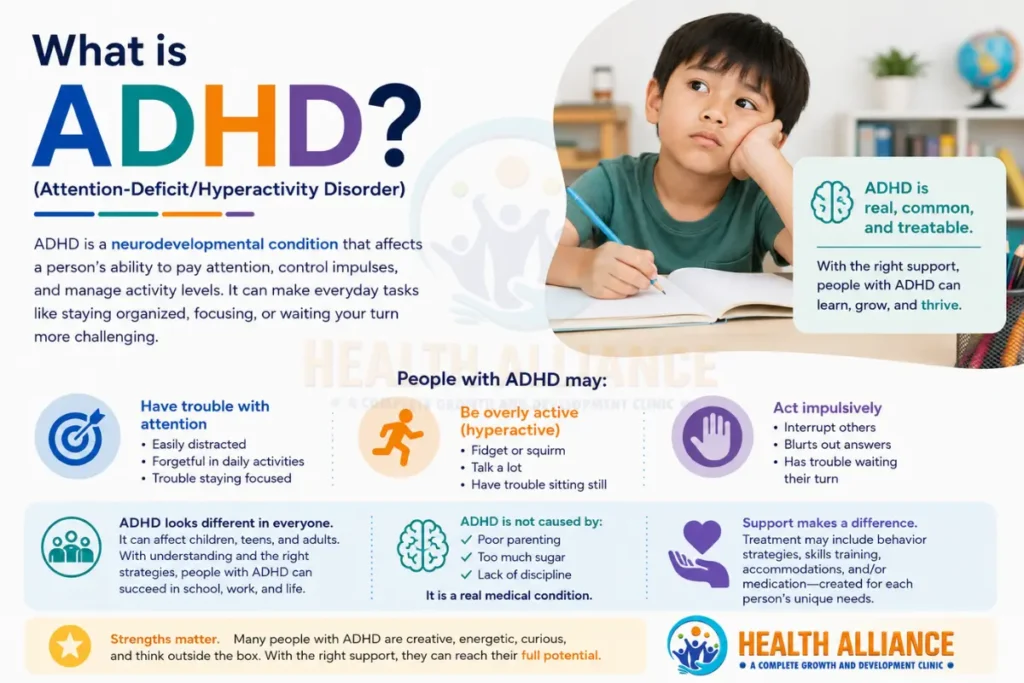
Attention-Deficit/Hyperactivity Disorder, or ADHD, is a disorder that interferes with brain function. Despite the label, having ADHD does not imply that you are not paying attention. Instead, it indicates that you have difficulty to controlling your focus or focusing it on particular tasks. Symptoms of ADHD include impulsive behavior, trouble focusing, and an inability to sit still. But it also gives you the capacity to “get in the zone”—that is, to focus intently on things that you truly appreciate.
ADHD symptoms can last till adulthood and usually start in childhood, often between the ages of three and six. But in other people, the disorder is not identified until much later in life. Although there isn’t a cure for ADHD, therapies including medication and behavioral therapy can help control its symptoms.
Approximately one in ten children between the ages of three and seventeen in the United States have been diagnosed with ADHD. If your child has ADHD, spend some time learning about the realities concerning the disorder and dispelling some prevalent myths about it. You can find new ways to support your child by making connections with other parents whose children have ADHD.
ADHD Symptoms in Children
Attention-Deficit/Hyperactivity Disorder symptoms are generally divided into two main categories: Inattention and Hyperactivity/Impulsivity. Every child may show different signs, and symptoms can vary from mild to severe depending on age, environment, and daily activities.
Inattention Symptoms
Children with inattentive symptoms often struggle to stay focused, organized, and attentive during tasks or conversations. These challenges can affect school performance, daily routines, and social interactions.
You may notice your child:
- Avoids tasks that require focusing for a long time
- Doesn’t pay attention to details or makes careless mistakes
- Forgets to do things they’re supposed to do
- Gets easily distracted by surrounding activities or even their own thoughts
- Has difficulty organizing toys, school supplies, or project steps
- Struggles to stay focused while listening, reading, or studying
- Frequently loses important items like school papers, books, or eyeglasses
- Appears distracted or daydreaming when someone is talking directly to them
- Starts tasks but quickly gets sidetracked and leaves them unfinished, such as homework or chores
These symptoms are often more noticeable in classrooms or structured environments where sustained attention is required.
Hyperactivity and Impulsivity Symptoms
Children with hyperactive or impulsive symptoms typically struggle to control their actions, wait patiently, or think before acting. Compared to other children their age, they may appear more energetic or restless.
You may notice your child:
- Fidgets or constantly moves their hands and feet
- Gets up when they’re expected to remain seated
- Finds it difficult to play or work quietly
- Has trouble waiting for their turn during activities or conversations
- Interrupts others or jumps into games without permission
- Runs, climbs, or jumps excessively when expected to stay calm
- Seems constantly “on the go” or overly active
- Speaks out of turn or finishes other people’s sentences
- Talks more than expected and struggles to stay quiet
A child with ADHD may frequently lose school items, interrupt others during conversations, or struggle to remain seated during class.
Autism vs ADHD: Key Differences
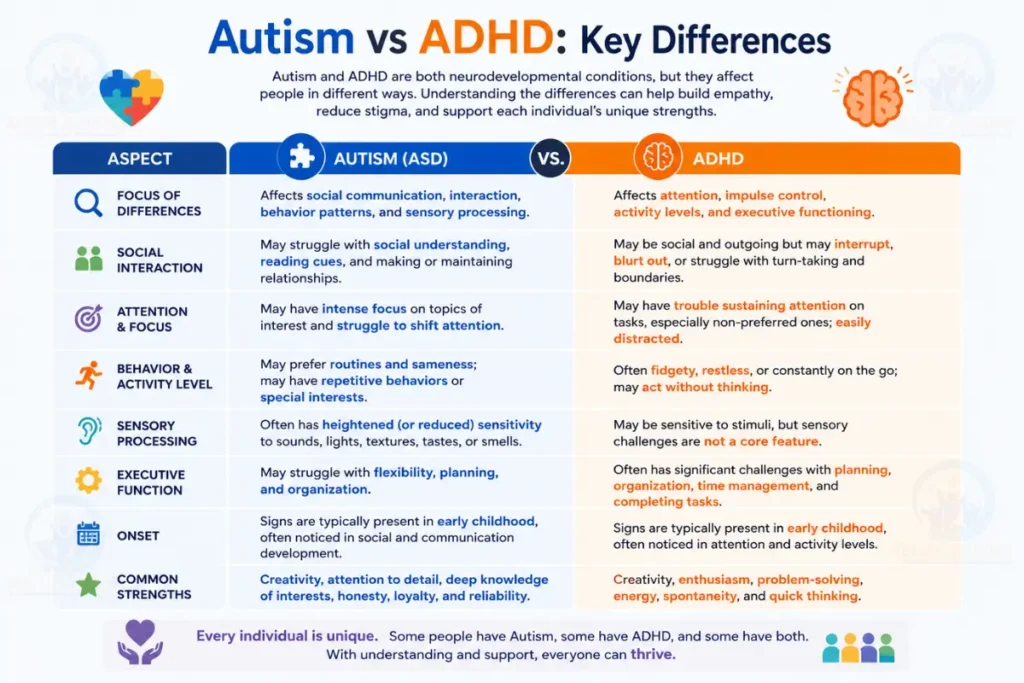
Although both of these conditions affect behavior and the learning process, the underlying challenges at their core are distinct. A detailed comparison is provided here.
Social Interaction
Autism
Children with autism often experience difficulty understanding social interactions. They may struggle to interpret facial expressions, maintain a conversation, or understand emotions.
Examples:
- Avoiding eye contact
- Preferring to play alone
- Difficulty making friends
ADHD
Children with ADHD generally understand social interactions, but they may face difficulties in them due to their impulsive behavior or tendency to be inattentive.
Examples:
- Interrupting conversations
- Talking excessively
- Difficulty waiting their turn
- Appearing careless in social situations
The main difference is that autistic children do not naturally understand social cues, whereas children with ADHD typically understand them but struggle to control their own behavior.
Attention and Focus
Autism
Children with autism may focus intensely on subjects or activities they enjoy. They can spend hours concentrating on a specific interest.
ADHD
Children with ADHD often struggle to maintain their attention, particularly on tasks they find boring or repetitive. They shift rapidly from one task to another.
For example:
- A child with autism may become deeply absorbed in trains, numbers, or drawing.
- A child with ADHD may struggle to complete homework because they become distracted easily by other work.
Communication Skills
Autism
Communication delays are common in autism. Some children may speak late, repeat phrases, or have difficulty expressing emotions.
ADHD
Language development in children with ADHD is generally normal; however, they may speak impulsively, interrupt others, or experience difficulty organizing their thoughts.
Repetitive Behaviors
Autism
Repetitive behaviors are a core feature of autism. These behaviors may include:
- Hand flapping
- Rocking
- Repeating words
- Strict routines
ADHD
Children with ADHD are usually hyperactive rather than repetitive. Their movement is often due to restlessness rather than a need for routine.
Sensory Sensitivities
Autism
Sensory issues are very common in autism. A child may be extremely sensitive to:
- Loud sounds
- Bright lights
- Certain textures
- Food tastes or smells
ADHD
Some children with ADHD may also experience sensory challenges, but they are generally less severe compared to autism.
Emotional Regulation
Autism
Children with autism may experience emotional outbursts when overwhelmed by sensory input or changes in routine.
ADHD
Children with ADHD often struggle with frustration, impulsive emotional reactions, and mood swings.
Similarities Between Autism and ADHD
Autism and ADHD can sometimes occur together, which makes diagnosis more complex. In fact, many children diagnosed with autism also show symptoms of ADHD.
Shared Symptoms Include:
- Difficulty focusing
- Social challenges
- Emotional outbursts
- Sensory issues
- Trouble following instructions
- Difficulty in school environments
Because of these overlapping traits, professional evaluation is important for accurate diagnosis.
Can a Child Have Both Autism and ADHD?
Yes. Research shows that many children experience both conditions together. This is known as a co-occurring diagnosis. Reference https://pmc.ncbi.nlm.nih.gov/articles/PMC5711626/
A child with both autism and ADHD may show:
- Social communication difficulties
- Hyperactivity
- Impulsiveness
- Repetitive behaviors
- Poor attention span
Children with both conditions often require a combination of therapies and support strategies tailored to their unique needs.
Causes of Autism and ADHD
The exact causes of autism and ADHD are still being studied, but experts believe both conditions involve a combination of genetic and environmental factors.
Possible Causes Include:
- Family history
- Brain development differences
- Premature birth
- Exposure to environmental toxins
- Pregnancy complications
- Chromosomal factors in autism and ADHD primarily involve structural changes called copy number variants (CNVs)—large, rare deletions or duplications of DNA segments—as well as specific genetic syndromes that frequently cause both conditions.
It is important to understand that parenting style does not cause autism or ADHD.
Diagnosis Process
Early diagnosis is extremely important because it helps children receive the support they need during crucial developmental years.
Autism Diagnosis
Autism is diagnosed through:
- Developmental assessments
- Behavioral observations
- Speech and communication evaluations
ADHD Diagnosis
ADHD diagnosis typically includes:
- Behavioral questionnaires
- School performance review
- Attention and activity assessments
- Medical and psychological evaluation
Professionals such as pediatricians, psychologists, neurologists, occupational therapists, and speech therapists may all be involved in the diagnosis process.
Treatment and Management
There is no single cure for autism or ADHD, but early intervention can greatly improve a child’s life style.
Treatment for Autism
Common Therapies:
- Speech therapy
- Occupational therapy
- Behavioral therapy
- Sensory integration therapy
- Social skills training
Structured routines and supportive learning environments can also help autistic children develop confidence and independence.
Treatment for ADHD
Common Treatments:
- Behavioral therapy
- Parent training
- Classroom support
- Time-management strategies
- Medication in some cases
Children with ADHD often benefit from clear routines, positive reinforcement, and physical activities that help manage energy levels.
Tips for Parents
Parents play a major role in helping children with autism or ADHD.
Helpful Strategies:
- Create consistent routines
- Use visual schedules
- Encourage positive behavior
- Break tasks into smaller steps
- Maintain open communication with teachers and therapists
- Provide emotional support and patience
Every child is unique, so strategies should be adjusted based on individual needs.
Importance of Early Intervention
Early support can make a significant difference in communication, learning, emotional development, and social skills.
Children who receive therapy and guidance early often show:
- Better communication skills
- Improved academic performance
- Increased independence
- Stronger emotional regulation
- Better social relationships
Parents should seek professional help if they notice developmental concerns rather than waiting for symptoms to improve on their own.
Conclusion
Understanding the distinction between autism and ADHD is crucial for parents, teachers, and caregivers. Although both conditions impact behavior, social interaction, and learning abilities, they affect children in distinct ways.
Autism Spectrum Disorder primarily affects social interaction, behavioral patterns, and sensory responses, whereas Attention-Deficit/Hyperactivity Disorder primarily impacts focus, impulse control, and hyperactivity.
Early identification, accurate diagnosis, and individualized therapy can help children acquire essential life skills and reach their full potential. With the right support, children with autism or ADHD can lead meaningful, successful, and fulfilling lives.