
Toilet Training Problems: When to Seek Professional Help
10 Signs Your Child May Need Speech Therapy
Health Alliance
July 6, 2026
Child Developmental
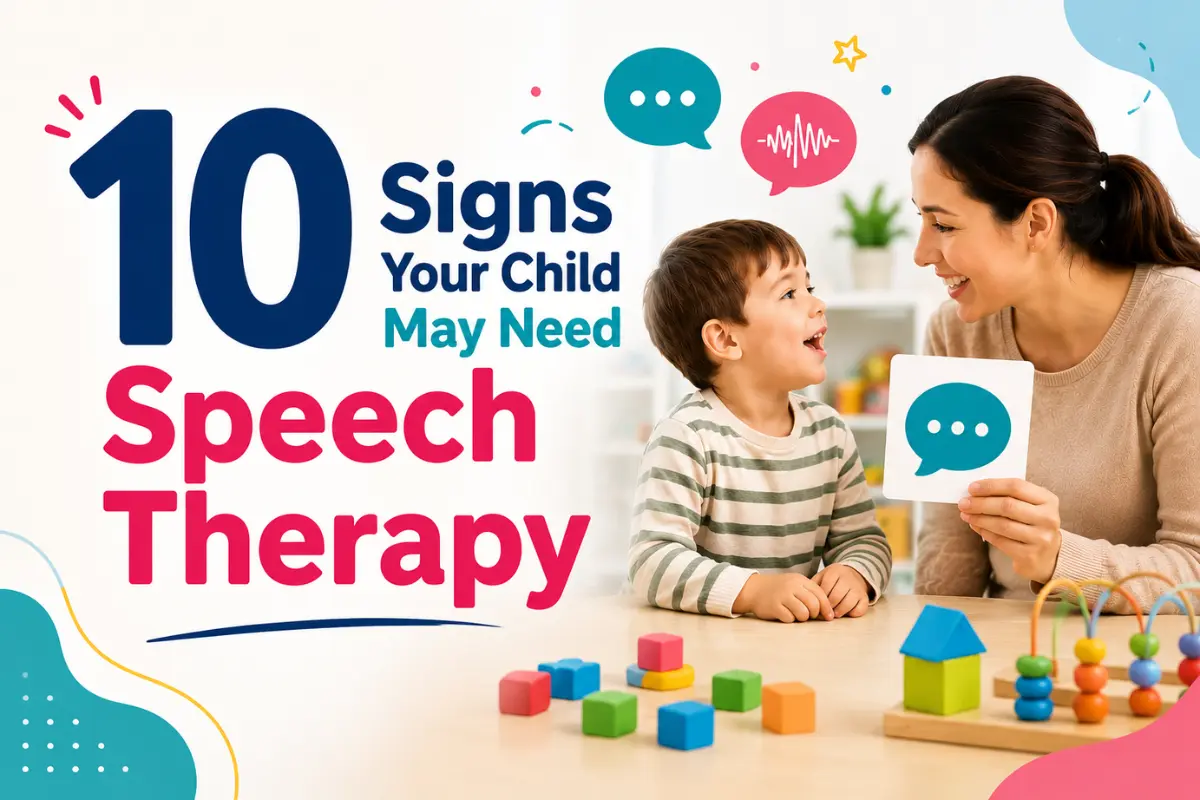
Is your child having difficulty speaking, understanding words, or communicating with others? Every child develops at their own pace, but certain speech and language delays may require professional help. Early intervention can make a significant difference in a child’s communication skills, self-confidence, learning, and social development.
At Health Alliance, we are dedicated to helping children overcome developmental challenges through evidence-based therapies and expert guidance. If you notice any delays or issues regarding your child’s communication, interaction style, behavior, or daily activities, seeking timely professional help can be highly beneficial. Consulting a specialist—such as a speech-language pathologist (SLP), occupational therapist (OT), or behavioral therapist—is not a sign of parental failure. Instead, it demonstrates your commitment to understanding your child’s needs and providing the right support to help them reach their full potential. Timely intervention can improve a child’s development, boost their self-confidence, and help them thrive in home, school, and social environments.
In this article, we will discuss 10 common signs that your child may need speech therapy and when parents should take a professional help.
What Is Speech Therapy?
Speech therapy helps improve children’s communication skills. A speech-language therapist works on speech clarity, language development, listening skills, social interaction, and—if necessary—difficulties with eating or swallowing.
If your child is having trouble expressing themselves or understanding others, speech therapy could be helpful for them.
10 Common Signs That Your Child May Need Speech Therapy
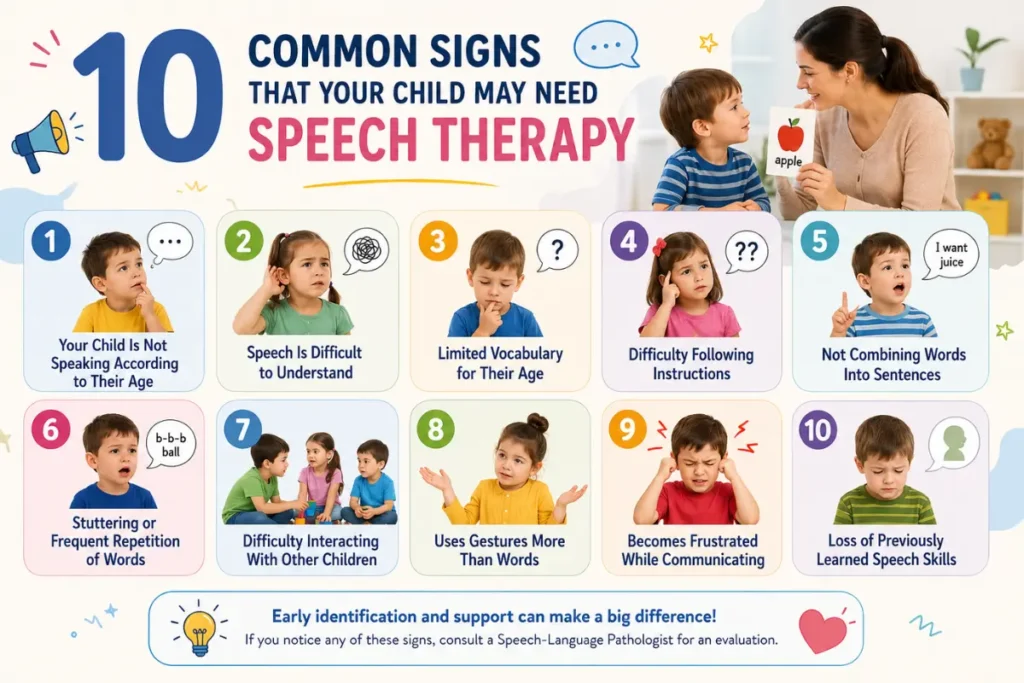
1. Your Child Is Not Speaking According to Their Age
Children reach speech milestones at different times, but significant delays may indicate a speech or language disorder.
Some general milestones include:
- Around 12 months: Saying simple words like “mama” or “dada”
- Around 2 years: Using 50 or more words and combining two words
- Around 3 years: Speaking in short sentences
If your child is significantly behind in these milestones, it might be necessary to get them examined.
2. Speech Is Difficult to Understand
Do your family members often find it difficult to understand what your child is saying?
It is normal for young children to make some speech errors, but their speech should gradually become clearer as they grow older. If your child’s speech is not clear for their age, clarity can be improved through speech therapy.
3. Limited Vocabulary for Their Age
A child who uses far fewer words compared to others of the same age may be experiencing a delay in language development.
Signs include:
- Difficulty naming common objects
- Using only a few words repeatedly
- Limited ability to express needs and feelings
Building vocabulary is an important part of speech and language development.
4. Difficulty Following Instructions
Does your child struggle to follow simple directions such as:
- “Bring your shoes.”
- “Put the toy in the box.”
- “Come here.”
Difficulty understanding spoken language can be a sign of receptive language challenges that may benefit from speech therapy.
5. Not Combining Words Into Sentences
By around two years of age, most children begin combining words such as:
- “Want water”
- “Mama come”
- “More juice”
If your child is still using only single words and finds it difficult to form phrases or sentences, professional support may be helpful.
6. Stuttering or Frequent Repetition of Words
Some children speak with pauses or hesitations for a while, but if the stuttering persists, it should be monitored.
Signs include:
- Repeating sounds or words frequently
- Getting stuck on words
- Visible frustration while speaking
Early intervention can help improve communication confidence and fluency.
7. Difficulty Interacting With Other Children
Communication involves more than speaking.
If your child:
- Avoids conversations
- Has trouble taking turns while talking
- Finds it difficult to make friends
- Struggles with social communication
Speech therapy can help develop important social interaction skills.
8. Uses Gestures More Than Words
Using gestures is a normal part of communication, especially for toddlers.
However, if your child mostly points, pulls your hand, or uses gestures instead of speaking, it may indicate delayed speech development.
9. Becomes Frustrated While Communicating
Children often become upset when they cannot express their thoughts clearly.
You may notice:
- Frequent tantrums
- Crying when trying to communicate
- Anger during conversations
- Giving up when asked to speak
These behaviors may occur because the child knows what they want to say but struggles to communicate it effectively.
10. Loss of Previously Learned Speech Skills
One of the most important warning signs is when a child loses words or communication skills they previously had.
For example:
- Stopped using words they once spoke
- Reduced eye contact
- Less interest in communicating
If you notice any regression in speech or language development, seek professional advice as soon as possible.
When Should Parents Seek Help?
You do not need to wait for your child to “grow out of it.”
Consider consulting a speech therapist if:
- You have concerns about your child’s speech or language development.
- Teachers or family members notice communication difficulties.
- Your child struggles to express needs or understand instructions.
- Communication challenges affect learning or social interaction.
Early support often leads to better outcomes and improved confidence.
How Speech Therapy Can Help
Speech therapy can help children:
- Improve speech clarity
- Build vocabulary and language skills
- Understand and follow instructions
- Develop social communication skills
- Improve confidence in speaking
- Reduce frustration related to communication
Each therapy plan is customized according to the child’s specific needs and developmental level.
Conclusion
Every child develops differently, but parents know their children best. If you notice any of these signs, consulting an expert early on can significantly improve your child’s communication skills.
The sooner speech and language challenges are identified, the better, as this can greatly assist the child in developing communication skills for school, friendships, and daily life.
Remember: Early intervention does not mean labeling the child—the goal is simply to provide the right support at the right time.