

Toilet Training Problems: When to Seek Professional Help
Low Self-Esteem in Children: Signs, Causes, and Effective Solutions
Health Alliance
June 30, 2026
Child Developmental
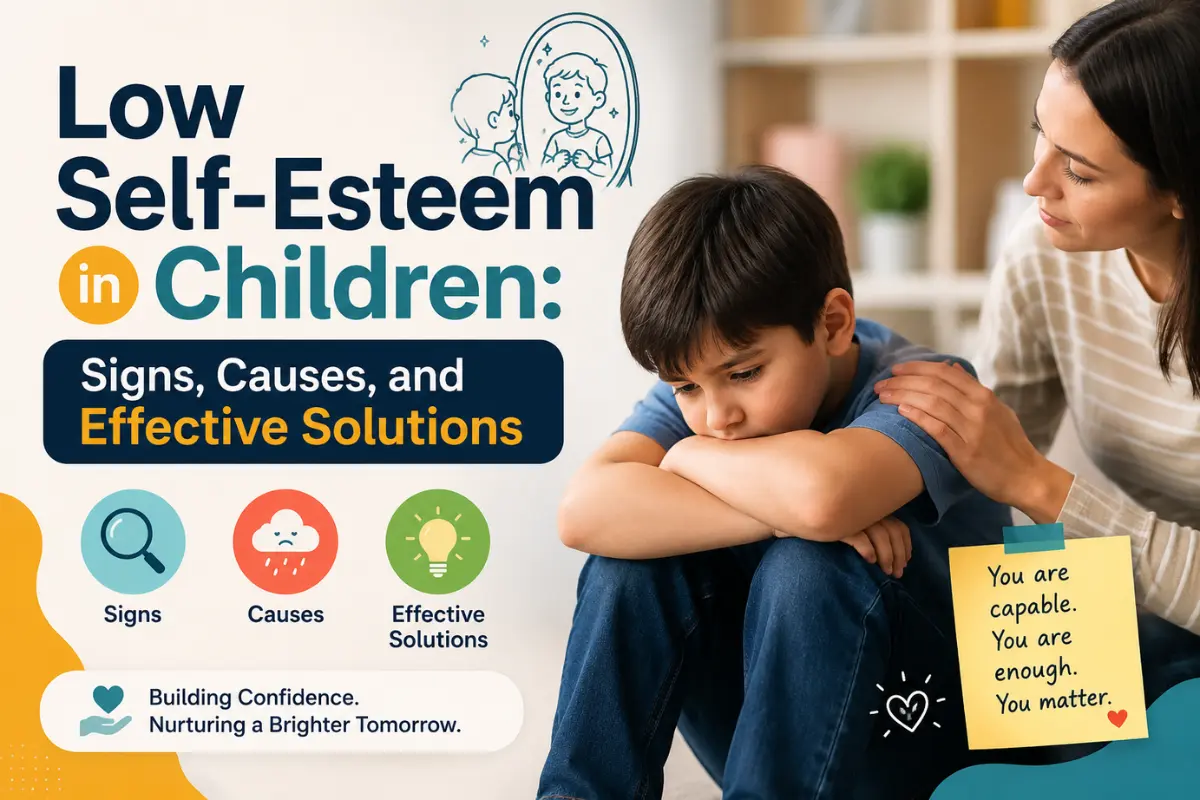
Confidence helps children explore new opportunities, build healthy relationships, overcome challenges, and develop resilience. However, some children struggle with feelings of self-doubt, insecurity, and fear of failure. These feelings can gradually develop into low self-esteem, affecting their emotional well-being, academic performance, and social interactions.
Low self-esteem is observed in children far more often than many parents realize. Children who constantly feel they are “not good enough” may avoid challenges, struggle to make friends, or become overly dependent on others to prove their worth. The good news is that with timely identification and the right support, children can improve their sense of self-worth and boost their self-confidence.
In this article, we will discuss the signs, causes, and practical solutions for low self-esteem in children.
What Is Self-Esteem?
Self-esteem is how you feel about your own general worth or value. It’s similar to self-respect in that it shows how confident you are in your skills and traits. Having good self-esteem can affect how motivated you are, how mentally healthy you are, and how good your life is in general. But it can be bad to have self-esteem that is either too high or too low. To find the right mix for you, you may need to learn more about your own amount of self-esteem.
Key elements of self-esteem include:
- Self-confidence
- Feelings of security
- Identity
- Sense of belonging
- Feeling of competence
Self-worth, self-regard, and self-respect are some other words that are often used to mean the same thing as self-esteem.
Self-esteem is lowest in childhood and increases during adolescence and adulthood, eventually reaching a stable and enduring level. In this way, self-esteem resembles the stability of personality traits over time.
Why Is Self-Esteem Important for Children?
Healthy self-esteem is important because it influences nearly every aspect of a child’s life, including:
- Academic Performance
Children who believe in themselves are more willing to participate in class, ask questions, and tackle difficult tasks.
- Social Relationships
Confidence helps children make friends, communicate effectively, and develop healthy social skills.
- Emotional Well-Being
Children with positive self-esteem are generally more resilient and better able to cope with disappointment and stress.
- Independence
Confident children are more likely to make decisions, solve problems, and take responsibility for their actions.
Without healthy self-esteem, children may become anxious, withdrawn, or fearful of failure.
Signs of Low Self-Esteem in Children
Recognizing the signs early can help parents provide support before the issue affects other areas of development.
1. Negative Self-Talk
Children with low self-esteem often criticize themselves.
Common statements include:
- “I’m stupid.”
- “I can’t do anything right.”
- “Nobody likes me.”
- “I’m not good enough.”
These comments may seem small at first but often reflect deeper feelings of insecurity.
2. Fear of Failure
Children with low self-confidence avoid trying new things because they are afraid of making mistakes.
They may:
- Refuse to participate in sports
- Avoid answering questions in class
- Give excuses to avoid challenging tasks
Their fear of failure often prevents them from discovering their true potential.
3. Giving Up Easily
When children with low self-confidence face a difficult task, they can easily become discouraged.
Instead of viewing challenges as opportunities to learn, they may believe failure confirms their negative self-image.
4. Constant Need for Reassurance
Some children repeatedly ask questions such as:
- “Did I do this right?”
- “Are you sure?”
- “Do you think I’m good at this?”
While occasional reassurance is normal, constant dependence on approval may indicate low self-confidence.
5. Difficulty Making Friends
Children with low self-esteem may struggle socially because they worry about being judged or rejected.
They may:
- Avoid group activities
- Stay quiet during conversations
- Feel nervous around peers
- Have difficulty expressing opinions
6. Sensitivity to Criticism
Even gentle feedback may feel like a personal attack.
Children may:
- Become upset easily
- Cry after correction
- Feel embarrassed by small mistakes
- Overreact to constructive feedback
7. Comparing Themselves to Others
Children with low self-esteem frequently compare themselves to classmates, siblings, or friends.
They may say:
- “She’s smarter than me.”
- “He’s better at sports.”
- “I can never do that.”
Constant comparison often reinforces feelings of inadequacy.
8. Avoiding New Experiences
Fear of failure may cause children to avoid opportunities that could help them grow.
They may hesitate to:
- Join clubs or activities
- Participate in competitions
- Try new hobbies
- Meet new people
9. Behavioral Changes
Low self-esteem does not always appear as sadness.
Sometimes children express emotional distress through:
- Irritability
- Anger
- Aggression
- Anxiety
- Withdrawal
10. Lack of Motivation
Children who believe they cannot succeed often stop trying altogether.
They may:
- Show little interest in schoolwork
- Avoid responsibilities
- Lose enthusiasm for activities they once enjoyed
Common Causes of Low Self-Esteem in Children
Understanding the root causes can help parents address the problem more effectively.
- Excessive Criticism
Children who receive frequent criticism may begin to believe they are incapable or not good enough.
- Unrealistic Expectations
Expecting perfection can make children feel like failures even when they perform well.
- Academic Difficulties
Struggles with learning, reading, writing, or attention can negatively impact confidence.
- Speech and Language Delays
Children who have difficulty communicating may become frustrated and less confident in social situations.
- Bullying or Social Rejection
Negative experiences with peers can significantly damage a child’s self-worth.
- Developmental Challenges
Children with ADHD, Autism Spectrum Disorder, sensory processing difficulties, or learning disabilities may face additional challenges that affect self-esteem.
- Lack of Positive Reinforcement
When children rarely receive encouragement or recognition, they may struggle to develop confidence in their abilities.
Practical Solutions for Building Self-Esteem
The good news is that self-esteem can be strengthened with consistent support and encouragement.
Focus on Effort Rather Than Results
Praise hard work, determination, and improvement rather than only achievements.
Instead of saying:
- “You’re so smart.”
Try:
- “I’m proud of how hard you worked.”
This helps children develop a growth mindset.
Encourage Independence
Allow children to make age-appropriate decisions and solve simple problems itself.
Small successes build confidence over time.
Celebrate Strengths
Every child has unique talents.
Whether it is:
- Art
- Sports
- Music
- Problem-solving
- Helping others
Recognizing strengths helps children develop a positive self-image.
Teach Positive Self-Talk
Help children replace negative thoughts with positive and realistic ones.
For example:
- Instead of “I can’t do it.”
- Try “I can improve with practice.”
Avoid Comparing Children
Every child develops differently.
Comparisons often create unnecessary pressure and reduce confidence.
Spend Quality Time Together
Children who feel loved, supported, and valued are more likely to develop healthy self-esteem.
Simple activities such as talking, playing, or reading together can strengthen emotional bonds.
Provide Opportunities for Success
Give children tasks they can successfully complete.
Success experiences help build confidence and motivation.
Model Healthy Self-Esteem
Children learn by observing adults.
Show confidence, accept mistakes gracefully, and demonstrate positive self-talk in daily life.
When Should Parents Need a Professional Help?
Sometimes low self-esteem is linked to underlying developmental, emotional, or behavioral challenges.
Consider seeking professional support if:
- Low confidence persists for several months
- Your child becomes socially withdrawn
- School performance declines significantly
- Anxiety or sadness becomes frequent
- Behavioral issues increase
- Communication difficulties affect daily life
Early intervention can help children develop healthier coping skills and improve confidence.
How Health Alliance Can Help
At Health Alliance, we understand that confidence and emotional well-being are closely connected to a child’s overall development. Our experienced team provides Clinical Psychology, Occupational Therapy, Speech Therapy, Behavior Modification, Social Skills Training, and Parent Counseling to identify the root causes of low self-esteem and create personalized intervention plans.
Through evidence-based therapies, counseling, Social Skills Training, and Parent Guidance, we help children build confidence, improve communication, develop emotional resilience, and achieve their full potential.
Conclusion
Low self-esteem can impact a child’s happiness, relationships, academics, and future success. However, with understanding, encouragement, and the right support, children can develop a strong sense of self-worth and self-confidence.
As a parent, your words, actions, and encouragement profoundly influence how your child views themselves. By recognizing the signs early and creating a positive, supportive environment, you can help your child build the confidence needed to thrive in every area of life.
Remember, self-confidence is not something children are born with—it is something that can be nurtured, developed, and strengthened over time. The sooner support is provided, the greater the opportunities for positive growth and long-term success.