

Toilet Training Problems: When to Seek Professional Help
Vestibular, Proprioceptive & Tactile Senses Explained for Parents
Health Alliance
July 26, 2026
Child Developmental
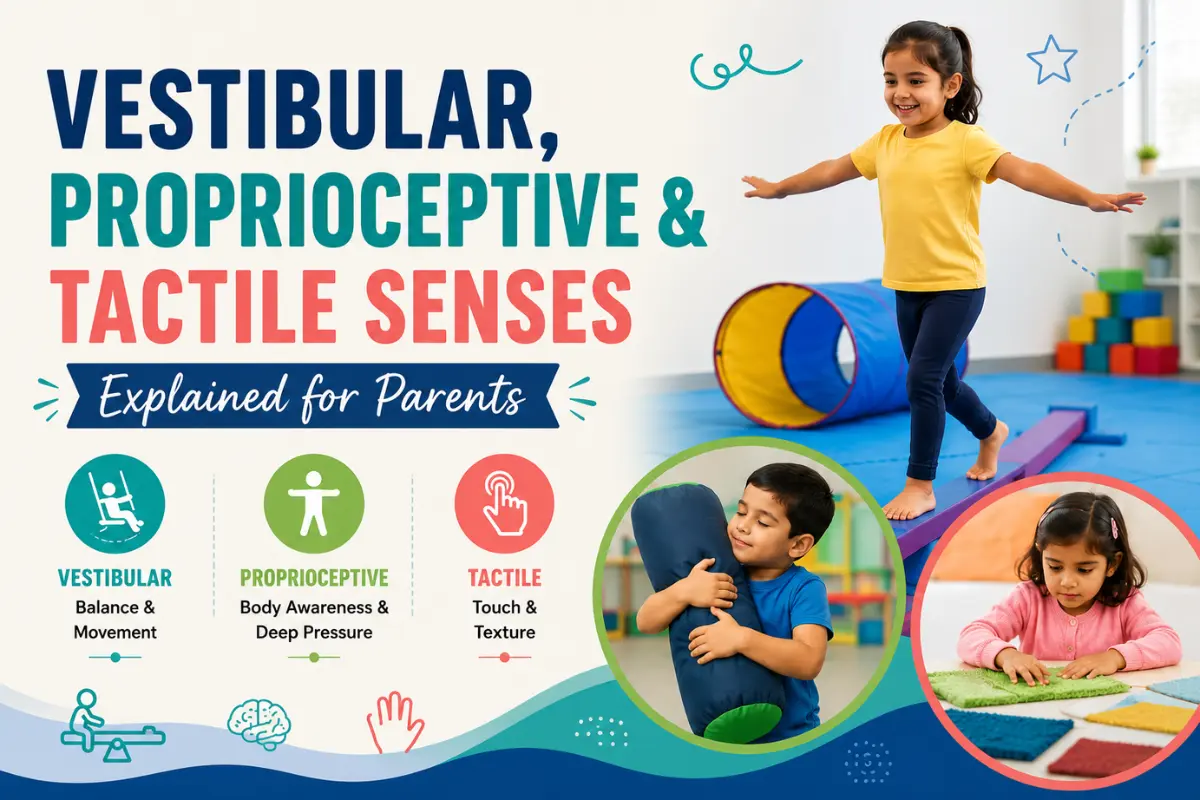
When parents think about the five senses, they usually think of sight, hearing, smell, taste, and touch. However, there are three additional sensory systems that play a vital role in a child’s development: the vestibular, proprioceptive, and tactile senses. These hidden senses help children balance, move confidently, understand where their bodies are in space, and respond appropriately to the world around them.
Children with sensory processing difficulties may struggle because their brains have trouble organizing and interpreting information from these sensory systems. This can affect learning, behavior, social skills, and daily activities.
In this guide, we’ll explain these three important senses in simple language so parents can better understand their child’s needs and know when to seek professional help.
What Is Sensory Processing?
Sensory processing is how your brain receives, organizes, and responds to information coming from your senses. Every second, the brain receives many sensory messages and decides which ones to pay attention to.
When sensory processing works well, children can:
- Sit and focus in class
- Play safely
- Maintain balance
- Control their body movements
- Learn new skills
- Interact comfortably with others
When it doesn’t work efficiently, children may become overly sensitive, under-responsive, or constantly seek certain sensory experiences.
Understanding the Vestibular Sense
The vestibular system is often referred to as the body’s balance and movement system. It is located in the inner ear and it tells the brain:
- Whether the body is moving
- Which direction it is moving
- Whether the body is upright or upside down
- How fast movement is occurring
- How to maintain balance
This system begins developing before birth and continues maturing throughout childhood.
Why Is the Vestibular Sense Important?
A healthy vestibular system helps children:
- Walk confidently
- Run without falling
- Ride a bicycle
- Climb playground equipment
- Maintain posture while sitting
- Coordinate eye movements
- Develop body awareness
Without good vestibular processing, even simple activities can become challenging.
Signs of Vestibular Processing Difficulties
Some children may be over-sensitive to movement.
They may:
- Become dizzy easily
- Fear swings or slides
- Avoid climbing
- Get motion sickness
- Feel anxious on escalators
- Avoid playground equipment
Others may be under-responsive and constantly seek movement.
They may:
- Spin repeatedly without getting dizzy
- Jump continuously
- Love fast rides
- Rock back and forth
- Always be moving
- Have difficulty sitting still
Neither pattern necessarily indicates poor behavior. It may reflect how the child’s nervous system processes movement.
Activities That Support the Vestibular System
Parents can encourage healthy vestibular development through fun activities like:
- Swinging
- Jumping on a trampoline
- Dancing
- Obstacle courses
- Bicycle riding
- Rolling on soft mats
- Balance beam games
- Yoga for children
- Hopscotch
These activities should always be supervised and adjusted according to the child’s comfort level.
Understanding the Proprioceptive Sense
The proprioceptive system is often called the body awareness system.
Special receptors located in muscles, joints, and tendons constantly send information to the brain about:
- Body position
- Muscle pressure
- Joint movement
- Force being used
This allows children to move without constantly looking at their hands or feet.
For example, your child can:
- Walk without watching every step
- Hold a pencil correctly
- Pick up a glass without crushing it
- Climb stairs
- Button a shirt
- Catch a ball
All of these rely heavily on proprioception.
Why Is Proprioception Important?
Strong proprioceptive awareness helps children:
- Improve coordination
- Develop handwriting
- Control body movements
- Judge strength
- Build motor planning skills
- Improve posture
- Feel calm and regulated
Interestingly, proprioceptive input is naturally calming for many children.
Signs of Proprioceptive Difficulties
Children with proprioceptive challenges may:
- Frequently bump into furniture
- Appear clumsy
- Fall often
- Use too much force when writing
- Break toys accidentally
- Hug people too tightly
- Have poor posture
- Struggle with sports
- Chew on clothing or pencils
- Seek rough play
These children are often described as “accident-prone,” although their nervous system may simply be receiving unclear body position signals.
Activities That Improve Proprioception
Parents can provide “heavy work” activities, which are excellent for proprioceptive development.
Examples include:
- Carrying groceries
- Pushing laundry baskets
- Pulling wagons
- Climbing
- Animal walks (bear walk, crab walk)
- Wheelbarrow walking
- Jumping
- Kneading dough
- Gardening
- Resistance band exercises
These activities strengthen muscles while improving body awareness.
Understanding the Tactile Sense
The tactile system refers to the sense of touch.
Our skin contains millions of sensory receptors that detect:
- Pressure
- Temperature
- Pain
- Texture
- Vibration
- Light touch
Touch helps children explore the world safely and comfortably.
Why Is the Tactile Sense Important?
The tactile system supports:
- Fine motor skills
- Emotional comfort
- Social interaction
- Safety awareness
- Self-care skills
- Learning through exploration
Touch also contributes to bonding between parents and children.
Signs of Tactile Sensitivity
Some children are over-sensitive to touch.
They may:
- Dislike hugs
- Avoid messy play
- Refuse certain clothing fabrics
- Hate haircuts
- Resist toothbrushing
- Become upset during nail trimming
- Remove socks frequently
- Complain about clothing tags
Other children may be under-responsive.
They may:
- Not notice injuries
- Enjoy messy play excessively
- Touch everything
- Seek rough textures
- Have a high pain tolerance
- Constantly fidget
Understanding these responses can help parents support their child without assuming they are simply being difficult.
Activities That Support the Tactile System
Gentle tactile experiences can improve sensory processing over time.
Examples include:
- Playing with sand
- Water play
- Finger painting
- Playdough
- Sensory bins
- Rice or bean bins
- Foam play
- Brushing therapy (only under professional guidance)
- Gardening
- Baking
Introduce new textures gradually and never force participation.
How These Three Senses Work Together
The vestibular, proprioceptive, and tactile systems do not work independently. They constantly communicate with each other.
For example, when a child climbs a playground ladder:
- Vestibular sense helps maintain balance.
- Proprioceptive sense tells muscles how much force to use.
- Tactile sense detects the ladder’s texture and grip.
Together, these systems allow smooth, coordinated movement.
If one system is not functioning efficiently, everyday tasks may become much harder.
When Should Parents Seek Professional Help?
Consider consulting an occupational therapist if your child:
- Frequently falls or appears unusually clumsy
- Avoids playground equipment
- Constantly seeks movement
- Is extremely sensitive to clothing or touch
- Has difficulty with handwriting
- Struggles with dressing independently
- Experiences frequent meltdowns during routine activities
- Has trouble sitting still and focusing
- Finds self-care activities unusually challenging
Early identification and intervention can significantly improve a child’s confidence, participation, and independence.
How Occupational Therapy Can Help
Occupational therapists assess how children process sensory information and develop individualized treatment plans.
Therapy may include:
- Sensory Integration Therapy
- Balance exercises
- Fine motor skill training
- Gross motor coordination activities
- Tactile play
- Heavy work exercises
- Parent education
- Home sensory programs
The goal is not to eliminate sensory differences but to help children respond more effectively to everyday sensory experiences.
Tips for Parents at Home
Supporting sensory development doesn’t require expensive equipment. Small daily activities can make a big difference.
Try to:
- Encourage outdoor play every day.
- Limit excessive screen time.
- Allow climbing, jumping, and active movement.
- Offer a variety of textures during play.
- Create predictable routines.
- Respect your child’s sensory preferences while gently introducing new experiences.
- Celebrate progress rather than expecting perfection.
- Communicate openly with teachers and therapists if concerns arise.
Consistency and patience are key to helping children build confidence in their sensory abilities.
Conclusion
The vestibular, proprioceptive and tactile senses are foundational building blocks for your child’s physical, emotional, and cognitive development. They affect everything from balance and coordination to attention, learning, handwriting, and emotional regulation.
It’s normal for kids to prefer some sensations to others once in a while, but when difficulties with sensation are ongoing, it may be time to have your child professionally evaluated. Knowing about these hidden senses enables parents to identify challenges early and offer the right support.
Children with sensory processing differences can develop better skills, feel more comfortable in their daily lives and reach their potential when provided with the right activities and guidance and occupational therapy if necessary.