
Toilet Training Problems: When to Seek Professional Help
Difference Between Disability and Disorder
Health Alliance
July 16, 2025
Child Developmental
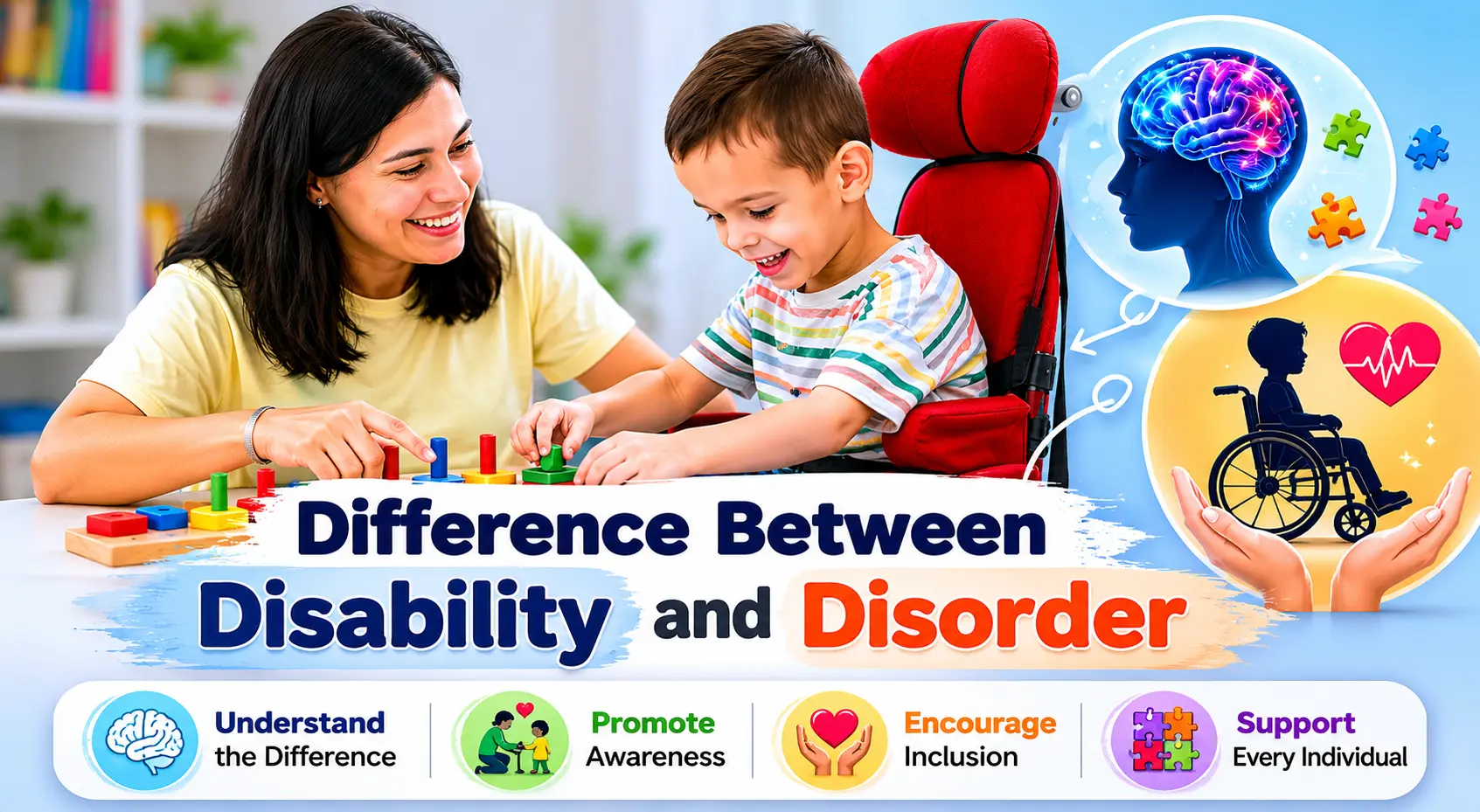
Many people confuse disability and disorder, but they are not the same. A disorder affects how the body or mind functions, while a disability affects a person’s ability to perform daily activities or participate fully in society.
Understanding the difference between disability and disorder is important for parents, teachers, caregivers, and healthcare professionals. Early identification and proper support can improve quality of life and development outcomes.
In this article, we will explain the meaning, causes, types, examples, and key differences between disability and disorder in simple language.
What is a Disorder?
When the body or mind does not work properly, it is called a disorder. Unlike diseases, disorders do not always have clear symptoms or a cause. Disorders can also be functional, that is, they change the way the mind or body works without causing damage or disease.
Types of Disorders:
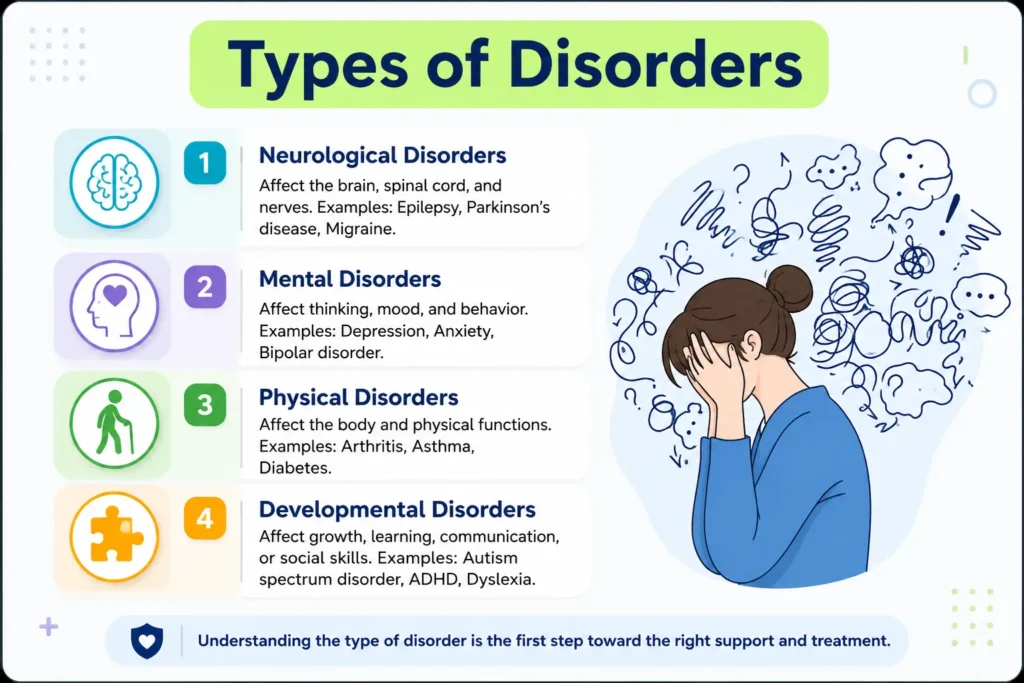
Disorders can be classified into three categories based on the part of the body or mind they affect:
- Mental Disorders: Situations that affect your feelings, thoughts, and actions.
Examples: Depression, anxiety disorder, bipolar disorder.
- Neurological Disorders: Affect the functioning of the brain and nervous system.
Examples: Epilepsy, Parkinson’s disease, multiple sclerosis.
- Physical Disorders: Affect bodily systems and organ functions.
Example: hormonal imbalances, cardiovascular issues.
- Developmental Disorders: These disorders, which usually occur in childhood, can affect physical, learning, or behavioral development.
Examples: Autism spectrum disorder (ASD), ADHD (Attention-Deficit/Hyperactivity Disorder), intellectual developmental disorder.
Causes of Disorders:
Disorders can have multiple causes, including:
- Genetic Factors: A predisposition to certain disorders may also be inherited. According to the Cleveland Clinic, specific genes may increase susceptibility, although they do not determine whether a person will develop the condition.
- Environmental Influences: Exposure to toxins, inadequate nutrition, or insufficient mental stimulation all contribute to this.
- Brain Injury or Trauma: Physical damage or abuse that affects brain development.
- Chemical Imbalance: The levels of neurotransmitters in the brain are abnormal.
- Prenatal Issues: The mother may have infections, engage in drug use, or encounter issues during pregnancy.
How Disorders Are Diagnosed:
The type of disorder and how it usually works are important for diagnosis.
- Clinical Evaluations: Observation, medical history review, and physical examination.
- Psychological Testing: Standardized instruments for measuring emotions, behavior, or cognitive skills.
- Diagnostic Manuals: The DSM-5 (Diagnostic and Statistical Manual of Mental Disorders, 5th edition) or the ICD-11 (International Classification of Diseases) are two sets of rules often used to diagnose mental disorders.
Examples of Common Disorders:
- ADHD (Attention-Deficit/Hyperactivity Disorder): ADHD, which stands for attention-deficit/hyperactivity disorder. It’s a neurodevelopmental disorder, which means it affects how your brain develops. Although it’s called ADHD, it doesn’t mean you can’t pay attention. It’s more likely that you won’t be able to focus on certain things. ADHD causes symptoms like not being able to concentrate, having trouble sitting still, and doing things without thinking. It also helps you get “in the zone” and focus fully on things you enjoy.
- Anxiety Disorder: Anxiety disorders are a psychological health problem. People with anxiety may feel fear and dread around certain things and people. You may also feel physical discomfort, such as a rapid heartbeat and sweating.
- Autism Spectrum Disorder (ASD): Autism spectrum disorder, or ASD, is a complex developmental disorder that causes people to have persistent problems communicating with others, have limited interests and do the same things over and over again. Autism is a condition that lasts a person’s whole life, but different people with autism need different services and support to deal with their problems.
What is a Disability?
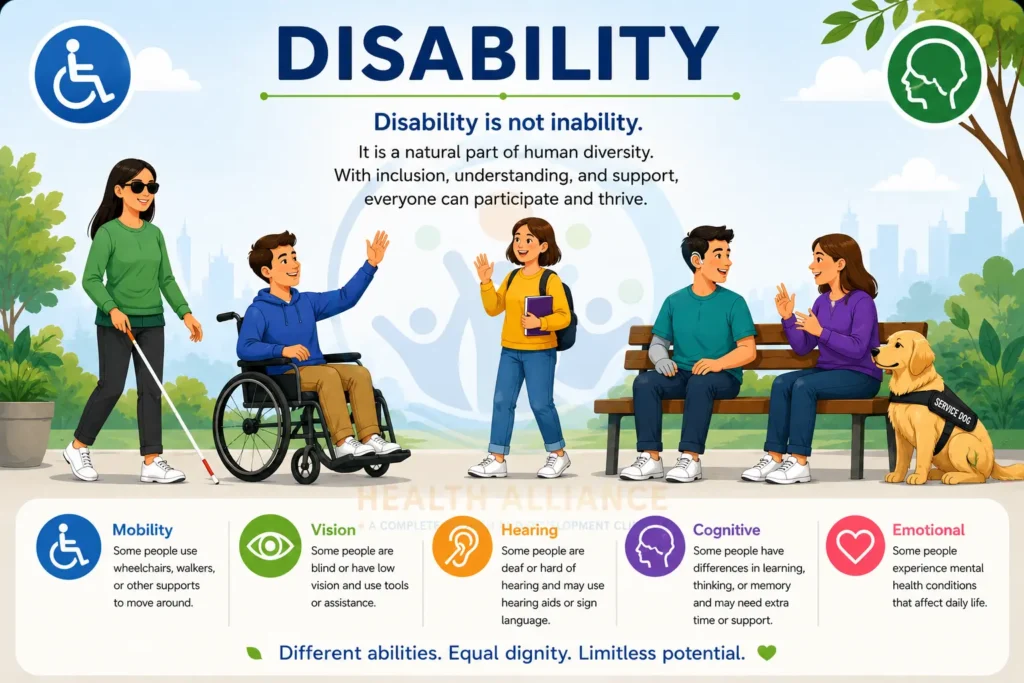
Disability is a physical, mental, sensory or intellectual condition that makes it difficult for a person to carry out everyday tasks or interact fully with the world around them. People can be born with a disability or develop a disability later in life as a result of illness, injury or changes that come with aging. Or disability occurs when people with health problems such as cerebral palsy, Down syndrome or depression are exposed to personal and environmental factors, such as poor attitudes, difficult access to transport and public buildings, and lack of adequate social support.
Types of Disabilities:
There are many different types of disabilities, but they can be grouped into these categories:
- Physical Disability: A physical disability is a limitation on a person’s physical functioning, mobility, dexterity, or stamina.
Examples: Cerebral palsy, spinal cord injury, amputation. - Intellectual Disability: When someone has an intellectual disability, they may have a cognitive disorder that affects their ability to learn, solve problems, or make decisions. Adaptive functioning includes things like being able to communicate and interact with others.
Examples: Down syndrome, global developmental delay. - Sensory Disability: Sensory disability refers to a condition where a person experiences difficulty or impairment in one or more of their senses, including vision, hearing, smell, touch, taste, and spatial awareness.
Examples: Visual impairment, hearing loss, deaf-blindness. - Mental or Psychological Disability: Involves mental health problems that last a long time and make it hard to live your life.
Examples: Schizophrenia, severe depression, bipolar disorder.
Definition:
- The World Health Organization (WHO) says that a disability is “a mismatch between a person’s body and the environment they live in.” This definition includes both physical and social barriers.
- The UN Convention on the Rights of Persons with Disabilities (CRPD) says that a disability is a long-term impairment that makes it hard to fully and effectively participate in society when combined with other barriers.
- The Rights of Persons with Disabilities (RPWD) Act, 2016 in India legally recognizes 21 types of disabilities, such as physical, mental, intellectual, and sensory impairments.
Long-Term Impact on Major Life Activities:
Disabilities can affect:
- Walking, speaking, or hearing
- Learning or understanding
- Things you do every day, like eating, bathing, or getting dressed
- Interacting socially and participating in work or education.
The effect could be mild or severe, depending on the type of disability and the amount of help given.
Examples of Disabilities:
- Cerebral Palsy: A group of disorders that affect movement and posture because the brain was damaged before or during birth.
- Visual Impairment: A loss of vision that makes it hard to do everyday tasks.
- Hearing Loss: Having trouble or being unable to hear sounds, which can be mild to severe.
Key Differences Between Disorder and Disability
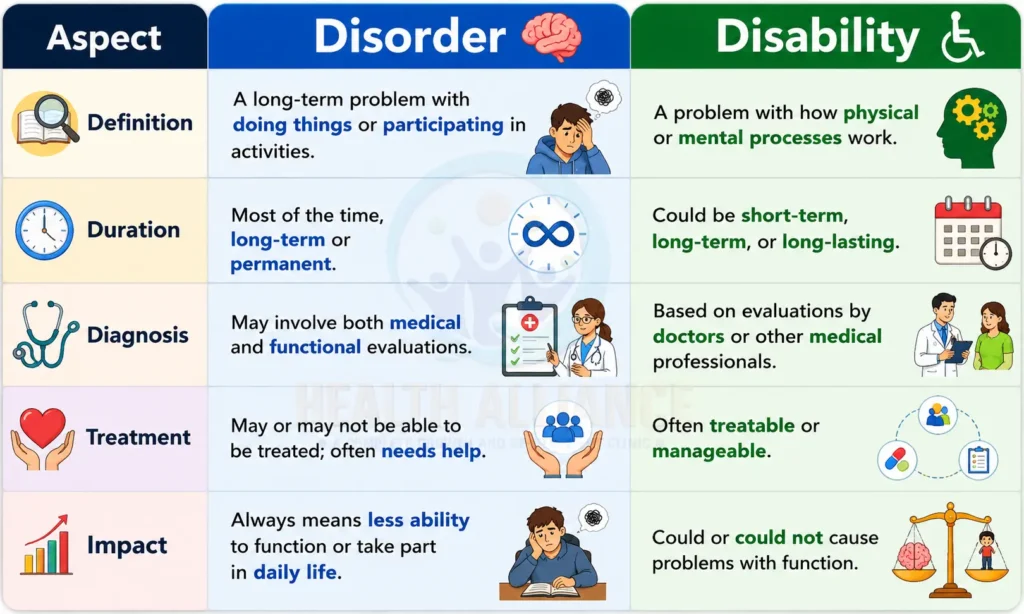
Disorders and disabilities can both make daily life more difficult, but they are not the same thing. A disorder is a medical or mental problem that makes it hard to do things normally, while a disability is a long-term problem that makes it hard to do things or take part in daily activities. To make sure you get the right diagnosis, support, and care, you need to know the differences.
As an example, someone with an anxiety disorder (disorder) might be able to live a normal life with therapy, but someone with cerebral palsy (disability) might need help and support for the rest of their life.
Relationship Between Disorders and Disabilities
Disorders and disabilities have different meanings, but they are often linked. Not all disorders cause disabilities, and not all disabilities are caused by disorders. Knowing how this relationship works helps people get more personalized care and support.
A Disorder Can Lead to a Disability
Some disorders, especially if they aren’t treated or are very bad, can cause long-term problems that make it hard to do everyday things, which can lead to a disability.
Example:
- A child with autism spectrum disorder may have issues communicating, which makes it hard for them to learn or make friends, which can lead to a developmental disability.
- A person with schizophrenia may have serious mental and emotional problems that make it hard for them to function in society.
A Disability May Exist Without a Disorder
Not all disabilities are caused by health problems. Some of them could be caused by a physical injury, problems during birth, or genetic conditions that don’t have a disorder.
Example:
- An individual who loses a leg in an accident may have a physical disability but not a mental or medical problem.
- A person who is born deaf has a sensory disability, but they may not have a mental or neurological disorder.
Some Individuals May Have Both
In many cases, people may have both a disorder and a disability, and these two things may affect each other or be the same thing.
Example:
- Someone with Down syndrome, which is a genetic condition that causes intellectual disability, may also get an anxiety disorder.
- A child with cerebral palsy, which is a physical disability, may also have a speech or learning disorder.
Social and Legal Effects
There are significant social and legal differences between disorder and disability. How a condition is classified can have a big impact on a person’s quality of life, from their ability to get health care and education to their eligibility for government benefits and legal protections.
Legal Protections for Disabilities
Most countries have legal frameworks to protect the rights of persons with disabilities:
- India: The Rights of Persons with Disabilities (RPWD) Act, 2016 lists 21 types of disabilities, such as autism, mental illness, and specific learning disabilities. It makes sure that everyone has the same chances in school, work, and getting public services.
- United States: The Americans with Disabilities Act (ADA) makes it illegal to discriminate against people with disabilities and requires that they be given reasonable accommodations in schools, workplaces, and public places.
- International: The UN Convention on the Rights of Persons with Disabilities (UNCRPD) supports the rights, dignity, and inclusion of people with disabilities all over the world.
Recognition of Certain Disorders as Disabilities
When a disorder makes it hard for someone to do things for a long time, it is legally considered a disability. This acknowledgment lets people get:
- Disability certification
- Educational accommodations (e.g., extra exam time)
- Job reservations or special quotas
- Financial aid and disability pensions
Examples of disorders often considered as disabilities (if functionally limiting):
- Autism Spectrum Disorder
- Schizophrenia
- Bipolar Disorder
- Specific Learning Disorders
Stigma and Lack of Awareness
- People with disorders, especially mental health and behavioral ones, often face more stigma because they aren’t seen or known about.
- People with disabilities, especially those who are physically or visibly disabled, may get sympathy, but they can also be left out or stereotyped.
- If these conditions are mislabeled or misunderstood, services may be denied or support may not be given correctly.
The Role of Awareness and Policy
Governments, institutions, and society must do the following to make sure that development is inclusive:
- Tell people the difference between disabilities and disorders.
- Ensure legal systems accurately classify and support both conditions.
- Support infrastructure that is easy to get to, education that is open to everyone, and fair jobs.
Importance of Correct Terminology
Using the correct terms, such as “disorder” and “disability,” is more than just semantics. It directly affects how individuals are identified, cared for, supported, and viewed by the public. When these terms are misused or used carelessly, they can lead to misunderstandings, incorrect diagnoses, and even denials of services or rights.
Promotes Accurate Diagnosis and Support
Professionals can diagnose a patient’s condition and develop effective treatment plans by using the appropriate language.
As an example, someone with cerebral palsy may require ongoing physical support and accommodations, while someone with ADHD may require medication and behavioral therapy.
Conclusion
People often mix up the words “disorder” and “disability,” but they actually mean different and affect people in different ways. A disorder is when something goes wrong with the way the body or mind normally works. It may or may not lead to a disability. On the other hand, a disability always means that you have some long-term trouble with doing everyday things or being social. It’s not just for school to know the difference; it’s also useful. It helps families find the right help, makes sure that professionals give the right support, and makes society more open and knowledgeable. Recognizing and respecting these differences is a step toward creating a world where everyone can live with dignity and purpose, no matter what problems they face.
Health Alliance believes that everyone should get the right care, the right diagnosis, and the right support. Our team of therapists and psychologists is here to help if your child has a developmental disorder or has been diagnosed with a disability.
Services We Offer:
- Occupational Therapy
- Speech Therapy
- Clinical Psychology
- Sensory Integration
- Special Education
- Early Intervention Programs
Visit us at:
At Health Alliance, we don’t just treat conditions—we empower individuals.
Frequently Asked Questions
Is autism a disorder or disability?
Autism spectrum disorder (ASD) is considered a neurodevelopmental disorder. In some cases, it may also qualify as a disability depending on how it affects daily functioning.
Can a disorder become a disability?
Yes. Some disorders may lead to disabilities if they significantly affect daily activities, learning, communication, or movement.
Is ADHD a disability?
ADHD is a neurodevelopmental disorder, but it may be considered a disability in educational or workplace settings if it impacts functioning.
Are all disabilities permanent?
No. Some disabilities may be temporary, while others can be lifelong.
What is the main difference between disability and disorder?
A disorder affects how the body or mind functions, while a disability affects a person’s ability to participate in daily life activities.