

Toilet Training Problems: When to Seek Professional Help
Some of the Common Habits in Behavioral Disorders
Health Alliance
April 25, 2026
Child Developmental
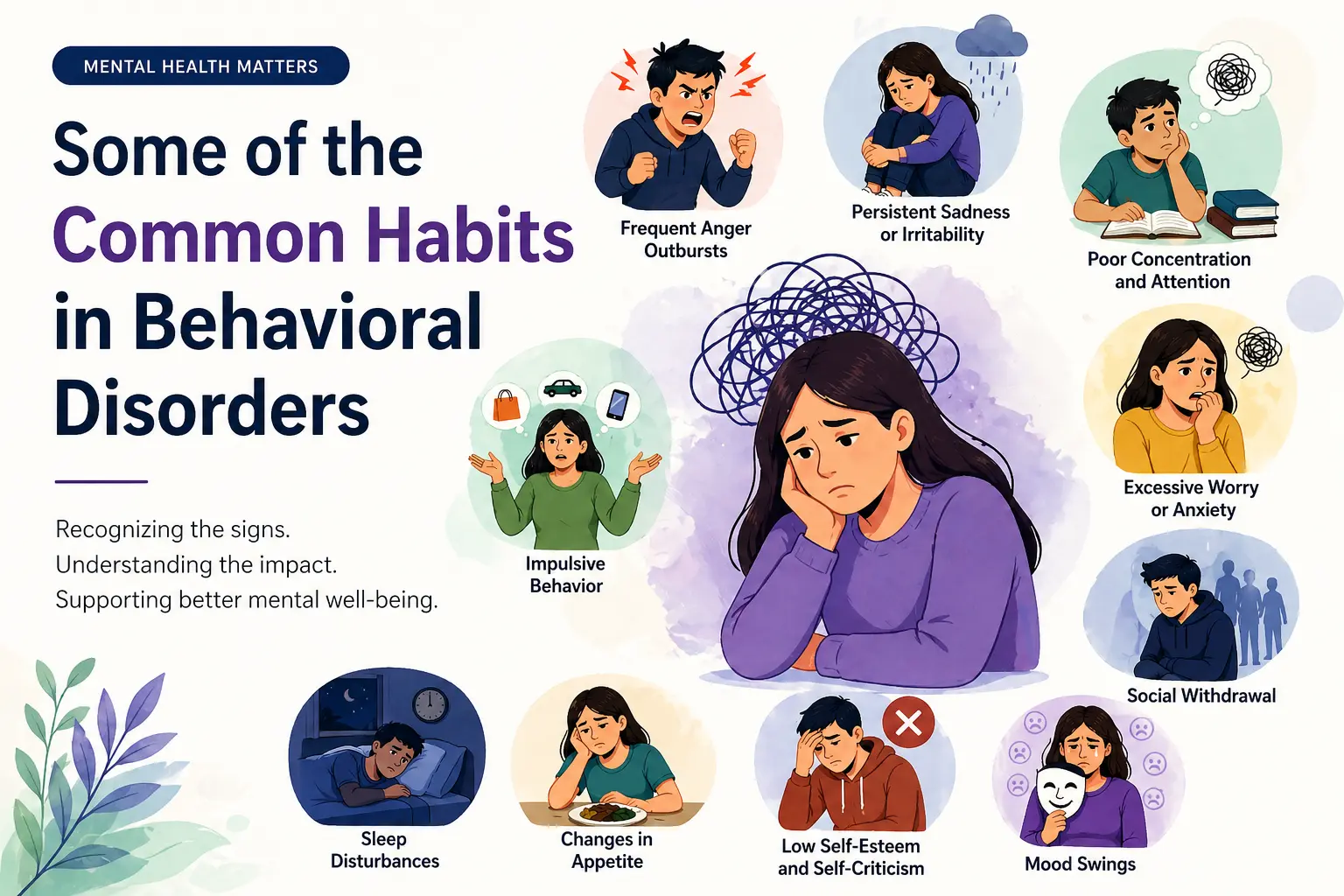
Behavioral disorders in children and adults are increasingly recognized as significant mental health concerns that affect emotional regulation, social interaction, and daily functioning. These disorders often manifest through persistent patterns of disruptive, impulsive, or inappropriate behaviors. While every individual is unique, there are several common habits and behavioral patterns frequently observed across different types of behavioral disorders.
Understanding these habits is essential for early identification, effective intervention, and long-term management.
What Are Behavioral Disorders?
Behavioral disorders refer to a group of conditions characterized by persistent patterns of disruptive behaviors that interfere with normal functioning. These may include conditions such as Attention-Deficit/Hyperactivity Disorder (ADHD), Oppositional Defiant Disorder (ODD), Conduct Disorder, and others.
These disorders are not simply “bad behavior” but are often linked to neurological, psychological, and environmental factors.
Common Habits Seen in Behavioral Disorders
Impulsivity
One of the most noticeable habits is impulsive behavior. Individuals may act without thinking about consequences.
Examples include:
- Interrupting conversations
- Making quick decisions without considering risks
- Difficulty waiting for their turn
Impulsivity is especially common in ADHD and can affect academic performance and relationships.
Aggression
Aggressive behavior is another common habit seen in certain behavioral disorders.
This may involve:
- Physical aggression (hitting, pushing)
- Verbal aggression (shouting, insulting)
- Destructive behavior (breaking objects)
If not addressed early, aggression can escalate and lead to serious social and legal issues.
Difficulty Following Rules
Children and adults with behavioral disorders often struggle with authority and rules.
Signs include:
- Frequent refusal to follow instructions
- Arguing with parents, teachers, or authority figures
- Deliberately breaking rules
This is commonly seen in Oppositional Defiant Disorder (ODD).
Lack of Attention and Focus
A reduced ability to concentrate is a hallmark habit, particularly in ADHD.
Common behaviors:
- Easily distracted
- Difficulty completing tasks
- Frequently switching activities
This can significantly impact academic and professional success.
Emotional Instability
Individuals may experience rapid mood changes and difficulty managing emotions.
Examples:
- Sudden anger outbursts
- Frequent frustration
- Overreaction to minor issues
Emotional dysregulation can strain personal relationships and social interactions.
Social Withdrawal or Poor Social Skills
Some individuals may avoid social interaction or struggle to communicate effectively.
Habits include:
- Avoiding group activities
- Difficulty making friends
- Misunderstanding social cues
This is often seen in children with developmental or behavioral challenges.
Repetitive or Compulsive Behaviors
Certain behavioral disorders may include repetitive habits.
Examples:
- Repeating actions or words
- Rigid routines
- Difficulty adapting to change
These behaviors can interfere with flexibility and adaptability in daily life.
Defiance and Non-Cooperation
Defiant behavior is a key characteristic in several behavioral disorders.
Signs include:
- Refusing to comply with requests
- Blaming others for mistakes
- Frequent temper tantrums
This can create challenges at home, school, and work environments.
Low Frustration Tolerance
Individuals may become frustrated very easily.
Common patterns:
- Giving up quickly on tasks
- Reacting strongly to minor setbacks
- Avoiding challenging situations
This habit can hinder learning and personal growth.
Risk-Taking Behavior
Some individuals engage in risky or unsafe activities.
Examples:
- Ignoring safety rules
- Engaging in dangerous play
- Substance experimentation (in adolescents)
Early intervention is crucial to prevent long-term consequences.
Causes of These Behavioral Habits
Behavioral disorders and their associated habits can arise due to a combination of factors:
- Genetic predisposition
- Brain structure and function differences
- Environmental influences (family, school, trauma)
- Parenting styles and social exposure
Understanding the root cause is essential for effective treatment.