

Toilet Training Problems: When to Seek Professional Help
How Play Helps Brain Development in Children
Health Alliance
June 1, 2026
ADHD, Autism
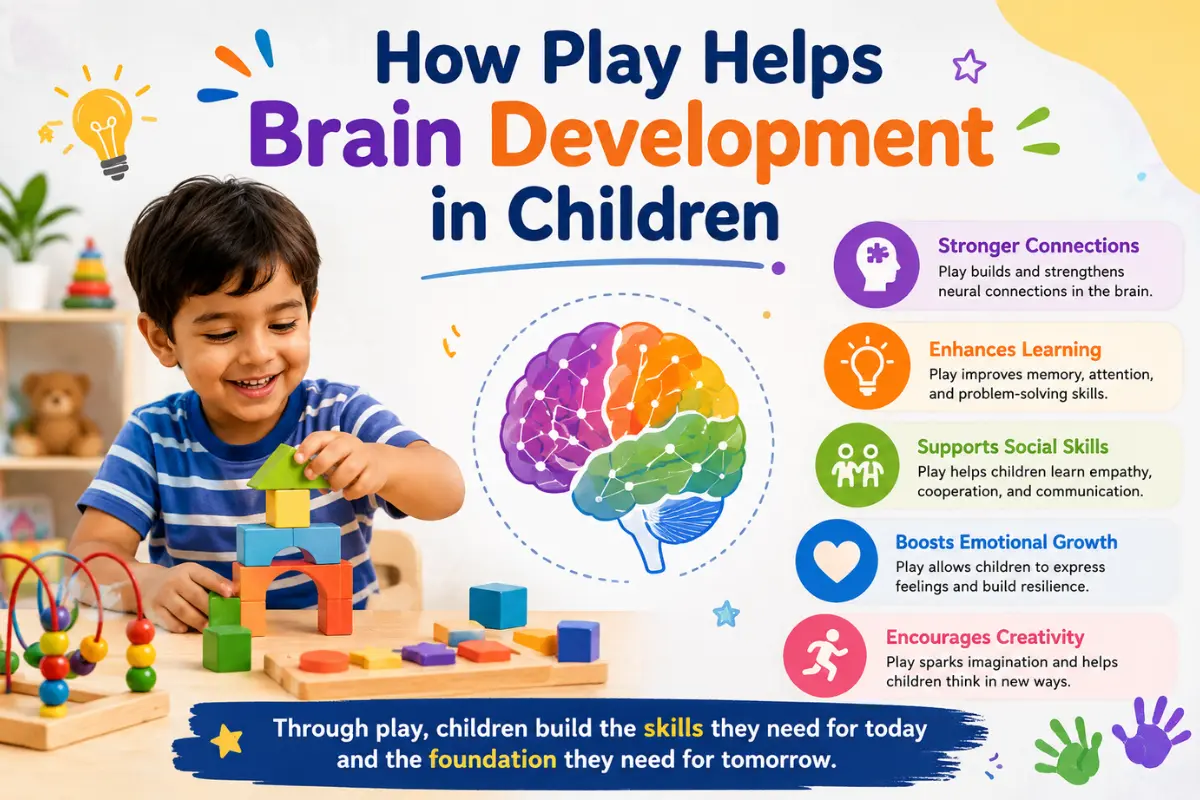
Play is often regarded as a simple activity that merely entertains children; however, modern neuroscience and child psychology reveal that play is one of the most critical experiences for healthy brain development. During childhood, the brain grows rapidly, and millions of neural connections are formed every second. The experiences children encounter during these early years determine how their brain will develop, learn, adapt, and function throughout their entire lives. Research consistently demonstrates that play is not merely a break from learning—rather, it is a learning process in itself.
From developing language skills to enhancing emotional regulation, creativity, memory, social understanding, and problem-solving abilities, play simultaneously activates multiple regions of the brain. Whether children are pretending to be superheroes, building with blocks, running around outdoors, drawing pictures, or playing with friends, their brains are developing in profound ways.
The Science Behind Play and the Brain
The human brain develops most rapidly during the first few years of life. During this period, neural pathways are strengthened through repetitive experiences. Play—by fostering exploration, movement, imagination, and social interaction—activates these pathways. Neuroscientists explain that play-based experiences stimulate specific regions of the brain—such as the prefrontal cortex, amygdala, hippocampus, and cerebellum—which are responsible for decision-making, emotions, memory, and physical coordination.
When children engage in play:
- Brain cells communicate more effectively.
- Neural connections become stronger.
- Stress levels reduce.
- Creativity and adaptability improve.
- Emotional and social intelligence develop.
Research also suggests that play supports neuroplasticity, the brain’s ability to adapt and reorganize itself through experiences. This means playful activities literally help shape the structure and function of the developing brain.
Cognitive Development Through Play
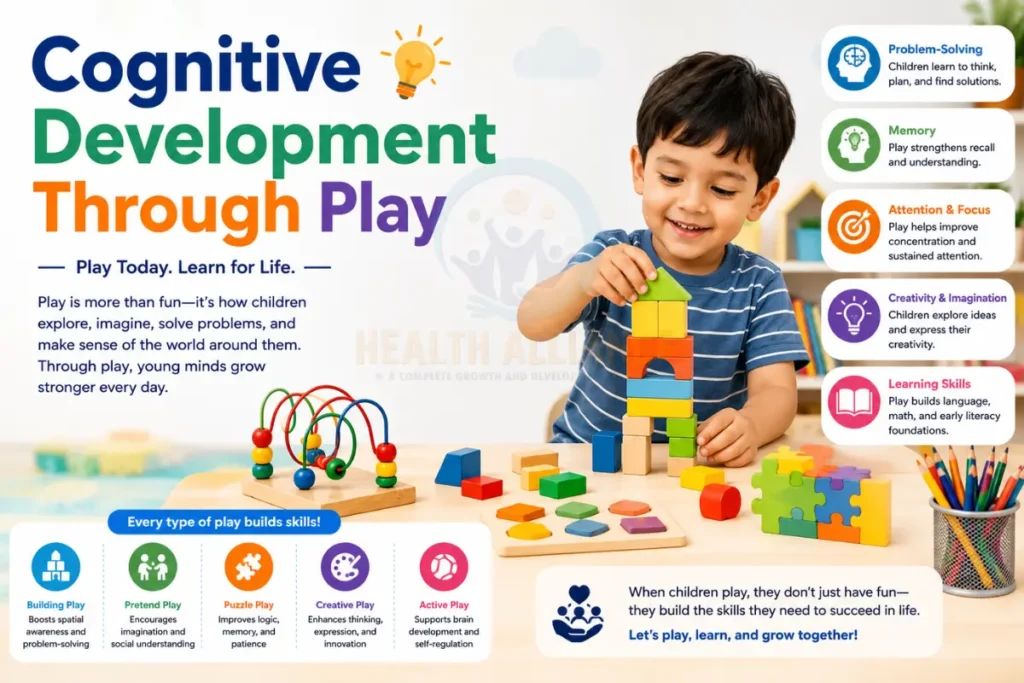
One of the biggest benefits of play is cognitive development. Cognitive skills include thinking, remembering, reasoning, attention, and problem-solving. Through play, children experiment with ideas, test solutions, and understand how the world works.
Improves Problem-Solving Skills
Building puzzles, stacking blocks, role-playing, and strategy games encourage children to think critically. They learn trial and error, cause and effect, and logical reasoning. For example, when a child builds a tower and it falls, the child learns balance, structure, and persistence.
Studies show that play improves executive functions such as working memory, impulse control, and cognitive flexibility. These skills are essential for academic success and future decision-making.
Enhances Memory and Attention
Interactive play strengthens attention span and memory retention. Activities like storytelling, pretend play, matching games, and drawing help children remember sequences, objects, and ideas. Play requires children to focus, follow rules, and adapt to changing situations.
Recent research on drawing activities found that creative play supports memory recall and executive functioning in children.
Supports Language Development
Play encourages communication. During pretend play or group games, children use words, gestures, storytelling, and expressions to interact with others. This improves vocabulary, sentence formation, comprehension, and listening skills.
Simple activities such as singing songs, playing with dolls, or pretending to run a shop can significantly improve language development. Research from early childhood education programs shows that play-based learning supports literacy and communication skills more effectively than rigid instruction alone.
Social and Emotional Brain Development
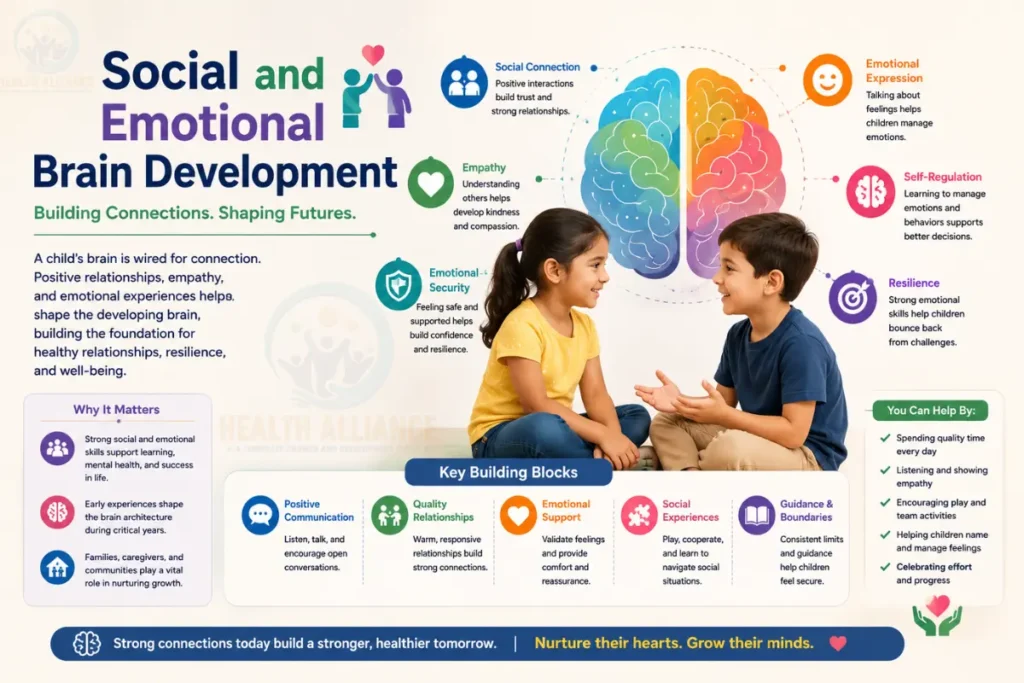
The brain areas responsible for emotions and social understanding develop through interaction and relationships. Play provides children with safe opportunities to express emotions, cooperate with others, and understand social rules.
Builds Emotional Regulation
Children often experience excitement, frustration, fear, happiness, and disappointment during play. These experiences help them learn emotional control. For example, waiting for a turn in a game teaches patience, while losing a game teaches coping skills.
Research shows that play helps children develop resilience, emotional regulation, and stress management abilities.
Encourages Empathy and Social Understanding
Pretend play allows children to imagine how others think and feel. When children act as parents, teachers, doctors, or superheroes, they practice understanding different perspectives.
A recent UK study found that doll play improves imagination and social skills by helping children reflect on emotions and beliefs of others.
Strengthens Relationships
Play creates emotional bonding between children and caregivers. Activities like reading stories, outdoor games, or imaginative play increase feelings of safety and connection. According to UNICEF, children who regularly play with parents are less likely to develop anxiety and behavioral problems.
Physical Play and Brain Growth
Physical movement is closely linked to brain development. Running, jumping, climbing, dancing, and sports improve blood flow to the brain and stimulate neural growth.
Benefits of Physical Play Include:
- Better coordination and motor skills
- Improved concentration
- Enhanced balance and body awareness
- Stronger neural connectivity
- Reduced stress and anxiety
Outdoor play is especially valuable because it combines physical activity with exploration and sensory stimulation. Nature-based play environments have been linked to improved creativity, attention, and emotional well-being.
Exercise during play also increases dopamine and serotonin levels, chemicals associated with motivation, mood, and learning.
Imaginative Play and Creativity
Creative and imaginative play is essential for developing innovation and flexible thinking. During pretend play, children create stories, invent solutions, and explore possibilities beyond reality.
For example:
- A cardboard box becomes a spaceship.
- A stick becomes a magic wand.
- A blanket fort becomes a castle.
These activities strengthen abstract thinking and creativity, which are important skills in adulthood. Research suggests that imaginative play activates the prefrontal cortex, supporting planning, self-control, and flexible thinking.
Creativity developed during childhood play is strongly connected to future innovation, adaptability, and problem-solving ability.
Play-Based Learning vs Passive Learning
Traditional learning often focuses on memorization and structured instruction, while play-based learning encourages exploration and active participation. Neuroscience shows that children learn better when they are emotionally engaged and curious.
Play-based learning:
- Increases motivation
- Reduces stress
- Improves retention
- Encourages independent thinking
- Makes learning enjoyable
Educational experts emphasize that play is not the opposite of education—it is one of the most effective forms of education during early childhood.
The Impact of Screen Time on Play
Modern lifestyles have reduced opportunities for free play. Many children spend more time on screens than in imaginative or outdoor activities. While some digital tools can support learning, excessive screen exposure may reduce opportunities for social interaction, creativity, and physical movement.
Research comparing doll play and tablet use found that children using tablets often played alone, while imaginative toy play encouraged social interaction and emotional growth.
Experts recommend balancing educational screen use with:
- Outdoor activities
- Creative play
- Social games
- Reading
- Family interaction
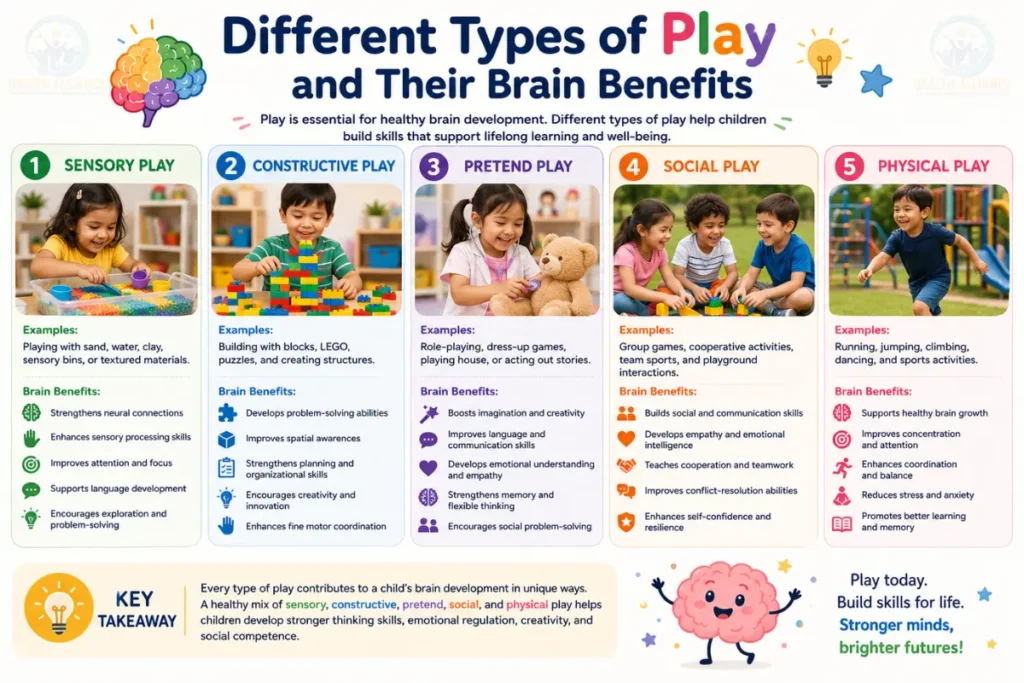
Different Types of Play and Their Brain Benefits
- Sensory Play
Activities involving textures, sounds, water, sand, or clay stimulate sensory processing and fine motor development.
- Constructive Play
Building blocks, puzzles, and crafts improve spatial reasoning and problem-solving.
- Pretend Play
Role-playing develops imagination, empathy, language, and emotional intelligence.
- Social Play
Group games teach teamwork, communication, and conflict resolution.
- Physical Play
Sports and active games strengthen motor skills, coordination, and brain-body connection.
Each type of play contributes to different aspects of brain development, creating a balanced foundation for lifelong learning.
How Parents Can Encourage Healthy Play
Parents and caregivers play a major role in creating playful environments. Encouraging play does not require expensive toys or structured programs.
Simple Ways to Support Brain Development Through Play:
- Allow unstructured free play time daily.
- Encourage outdoor exploration.
- Read and tell stories together.
- Limit excessive screen time.
- Provide open-ended toys like blocks or art supplies.
- Join children in imaginative games.
- Encourage social interaction with peers.
- Celebrate creativity instead of perfection.
The most valuable part of play is not the toy itself but the interaction, imagination, and exploration it encourages.
Long-Term Benefits of Play
Children who regularly engage in healthy play are more likely to:
- Develop stronger academic skills
- Build emotional resilience
- Form healthier relationships
- Show greater creativity
- Manage stress effectively
- Become confident problem-solvers
Play lays the neurological foundation for adulthood. The emotional, social, and cognitive skills developed through play continue influencing mental health, relationships, career success, and overall well-being later in life.
Conclusion
Play is far more than entertainment—it is a biological necessity for healthy brain development. Through play, children build neural connections that support thinking, learning, creativity, emotional control, communication, and social understanding. Every game, pretend scenario, drawing, or outdoor adventure strengthens important brain pathways that shape future development.
Modern neuroscience strongly supports what child development experts have long understood: children learn best when they are actively engaged, emotionally connected, and free to explore through play. Encouraging regular, meaningful play is one of the most powerful ways parents and educators can support a child’s brain development and lifelong success.